



Come for Angkor. Leave wondering why nobody told you about the rest.
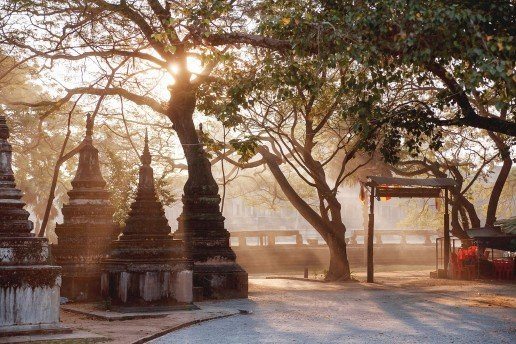
Angkor at first light – before the coaches arrive, while the air still smells of incense and the stones are cool – is one of those moments you know you’ll describe badly to people back home. Your photo does it more justice.
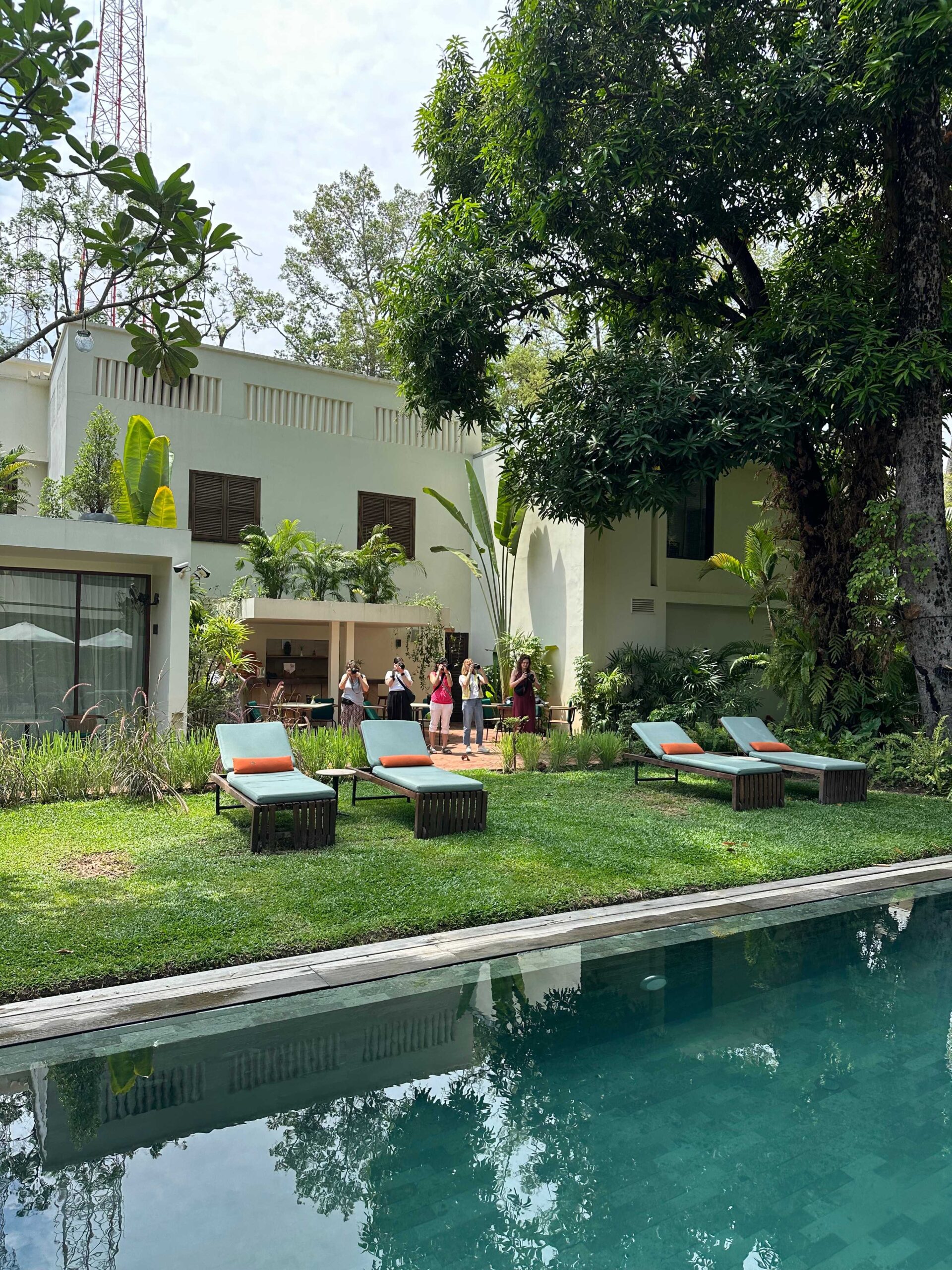
Siem Reap is the base. Small, surprising, reeks of history. The hotel is a converted French governor’s mansion with a pool that earns its keep in the afternoons. Ten days, and there’s a lot in them – temples at dawn, a floating village, monks at prayer, a circus troupe who let us backstage. Small group, good hotels, most guests on their own. The camera travels with you. Sometimes it’s the thing that gets you closer.

WEATHER
23 - 33°C

DURATION
10 DAYS

DEPOSIT
FROM £697

GROUP
CURIOUS ADULTS

GROUP SIZE
MAX 10

DOWNTIME
BALANCED

HOTEL
BOUTIQUE

PHYSICALITY
ACTIVE
share
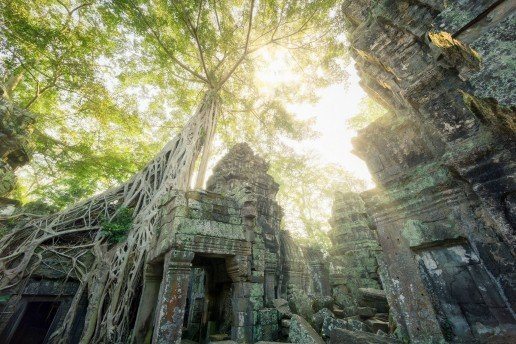
Ta Prohm at dawn, before anyone else arrived – the trees consuming the old stones, completely quiet. The canoe ride through the mangroves was one of the most peaceful hours I’ve spent anywhere. I came home with a stack of photographs and a genuine fondness for Cambodia and its people. Mike, Winchester


Highlights.


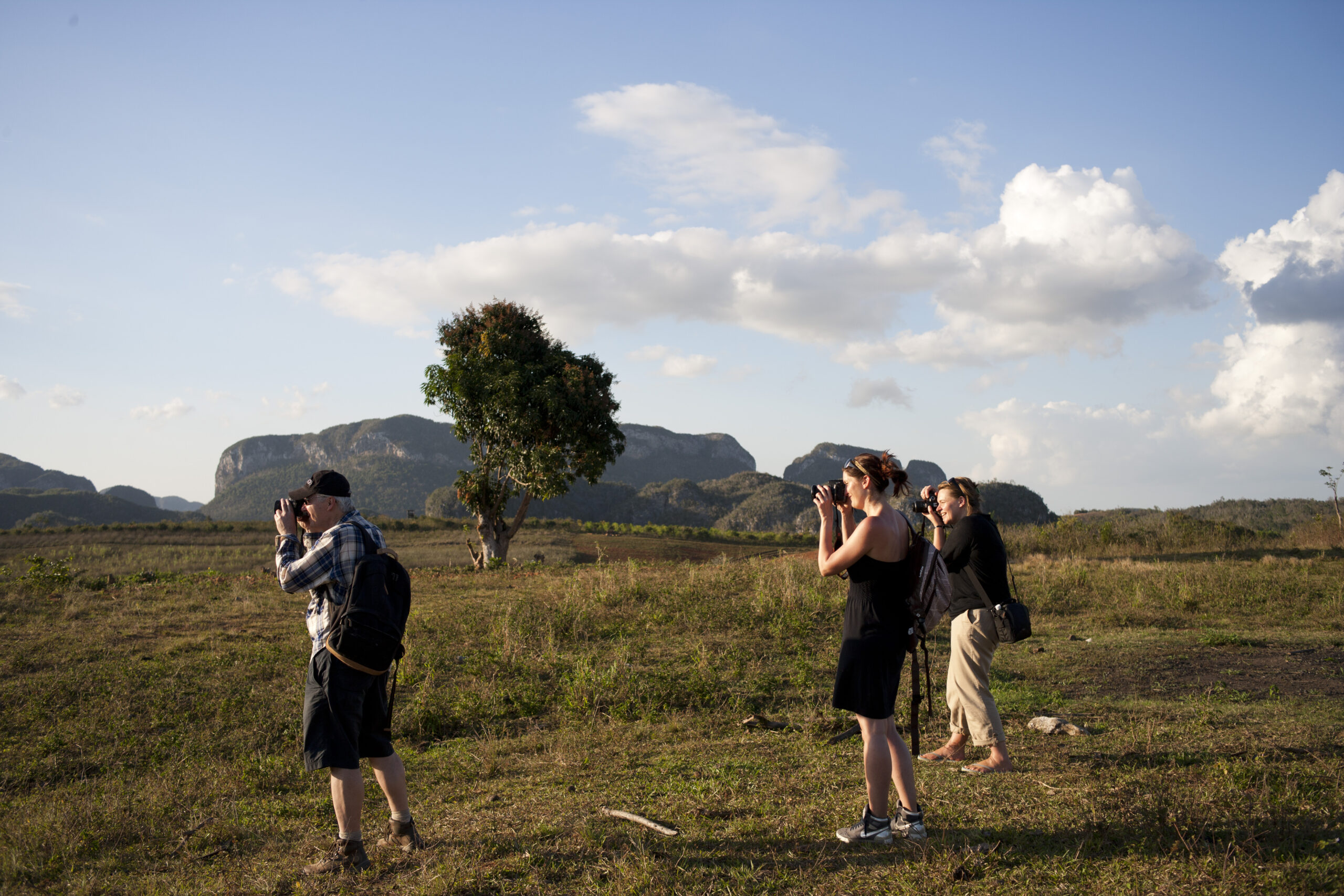
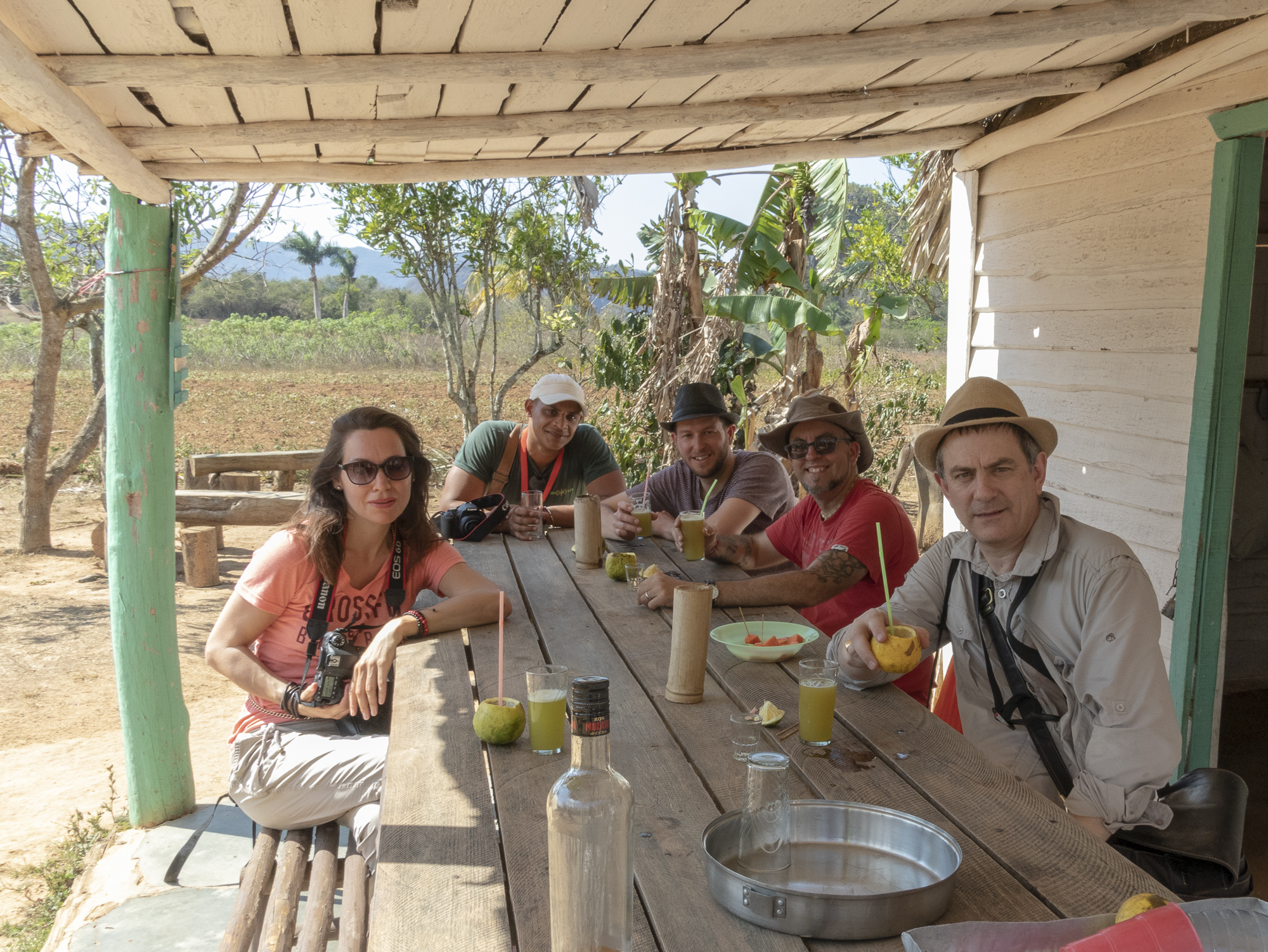
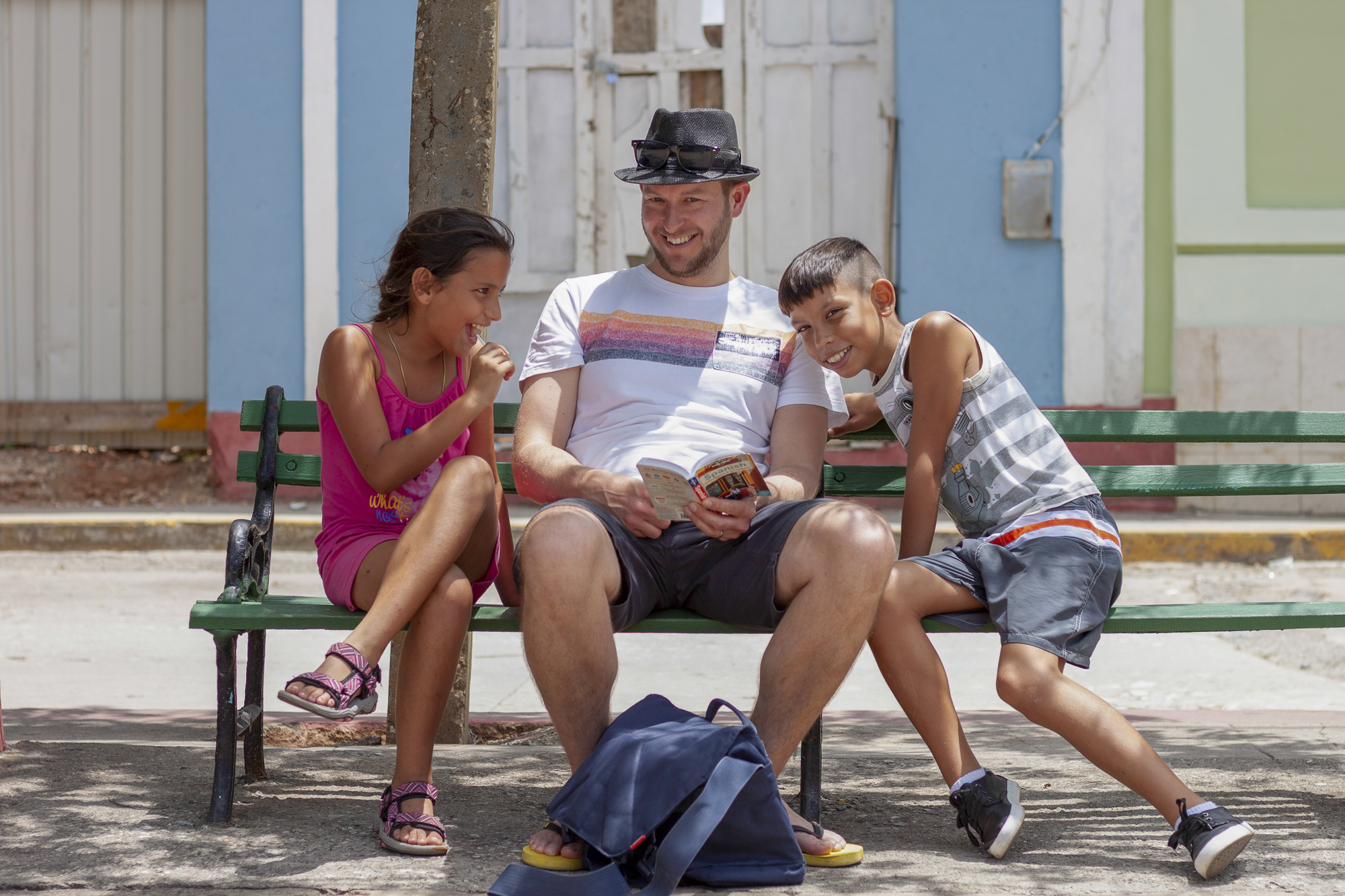
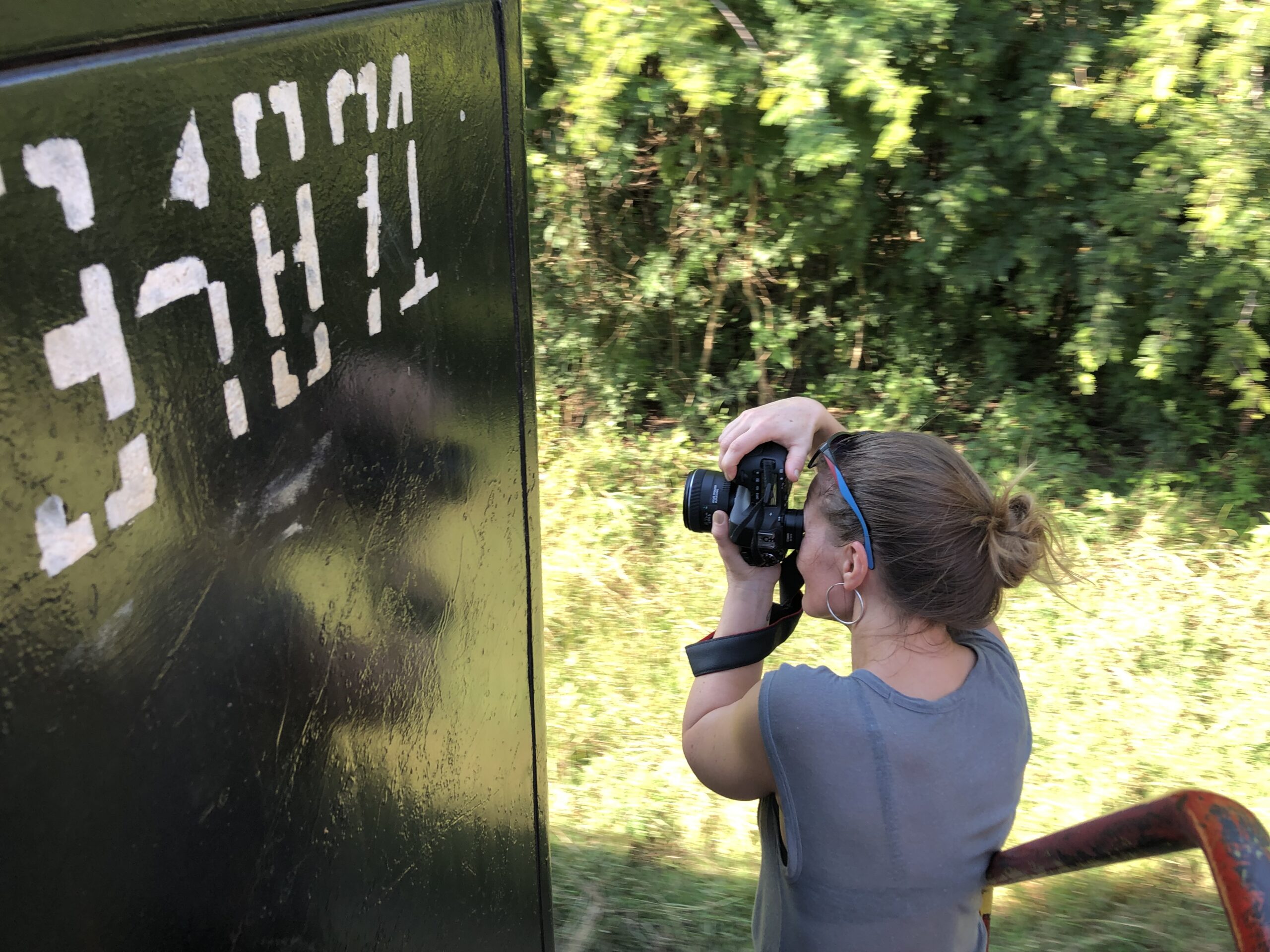
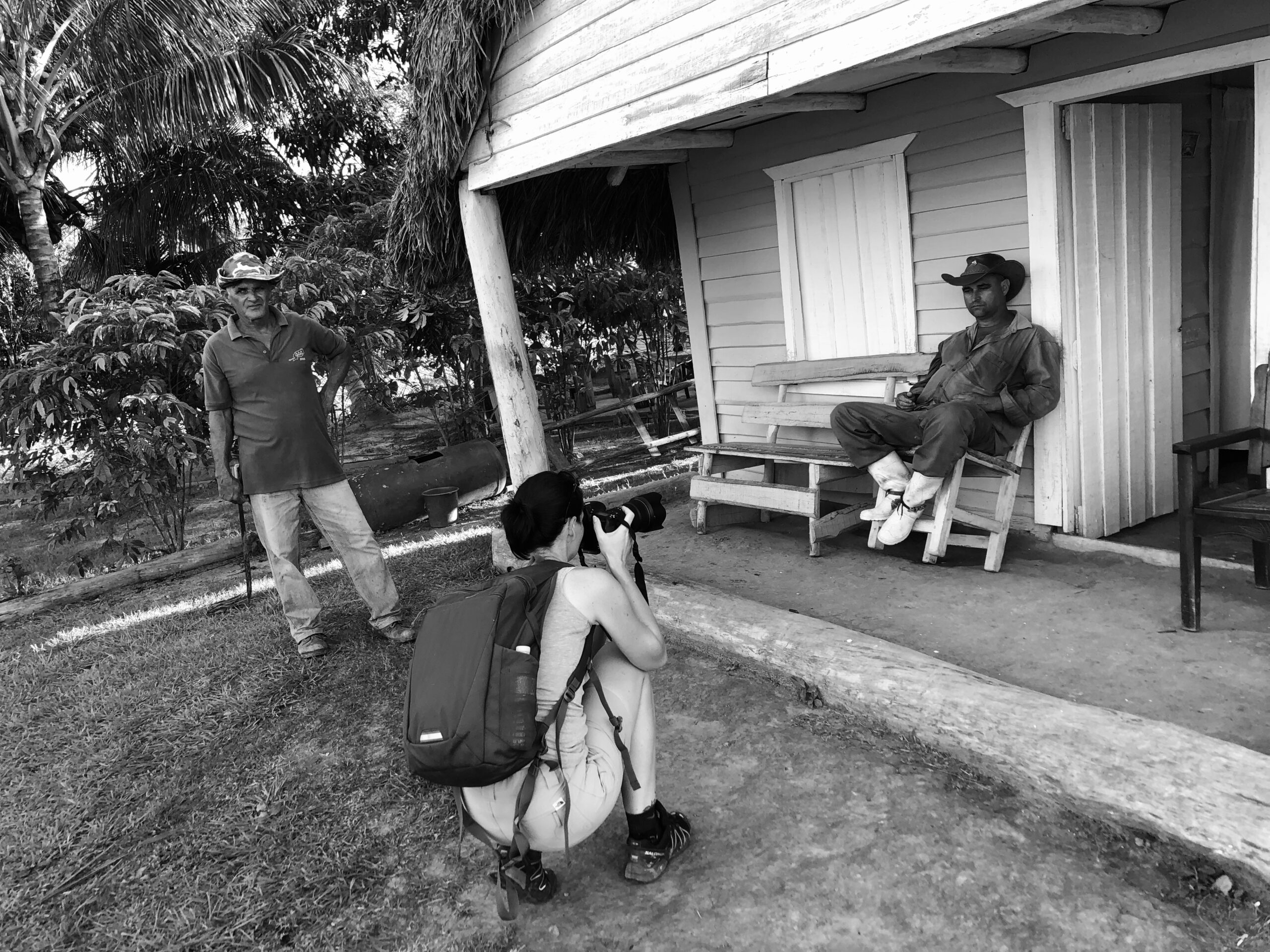
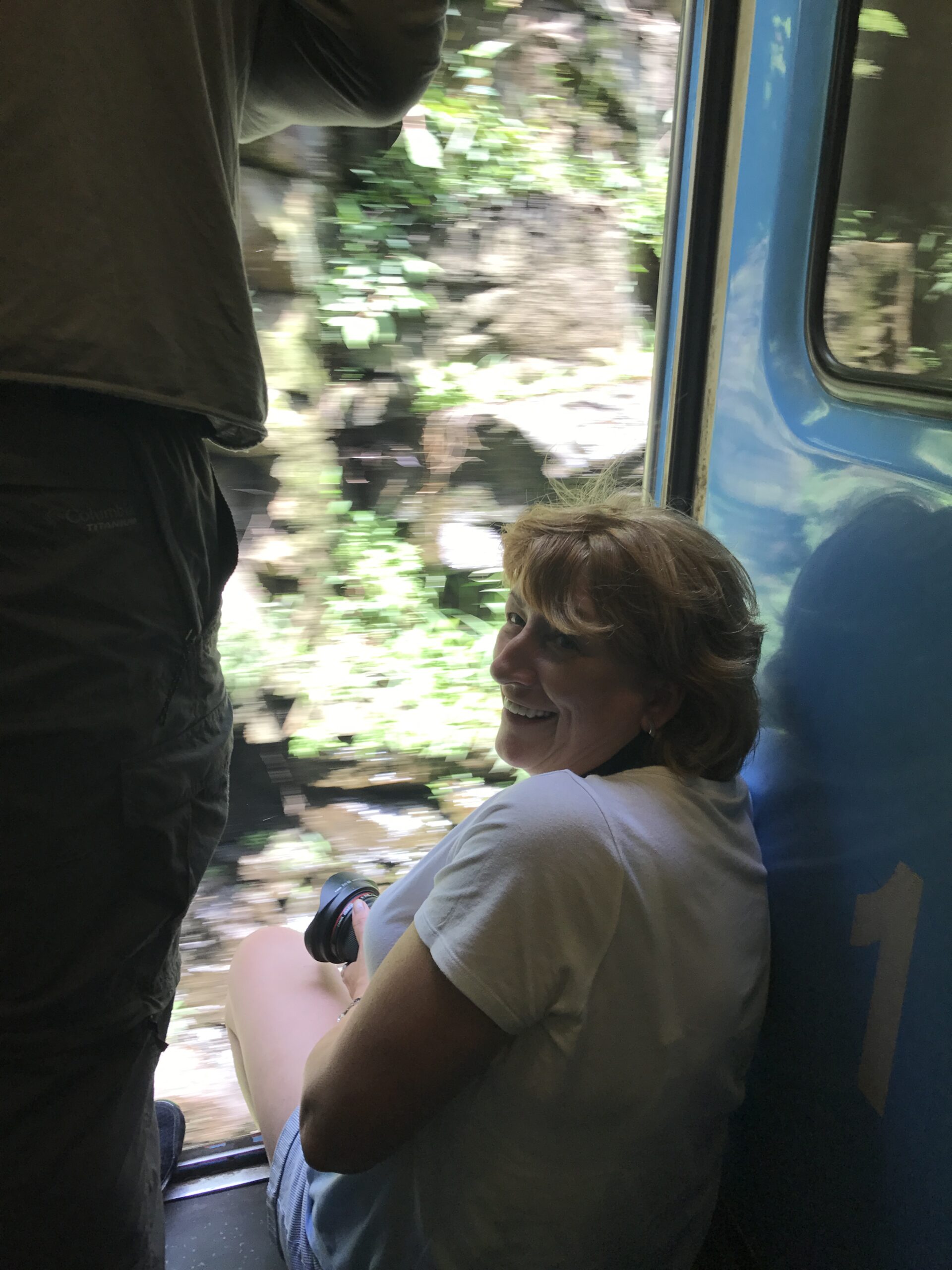
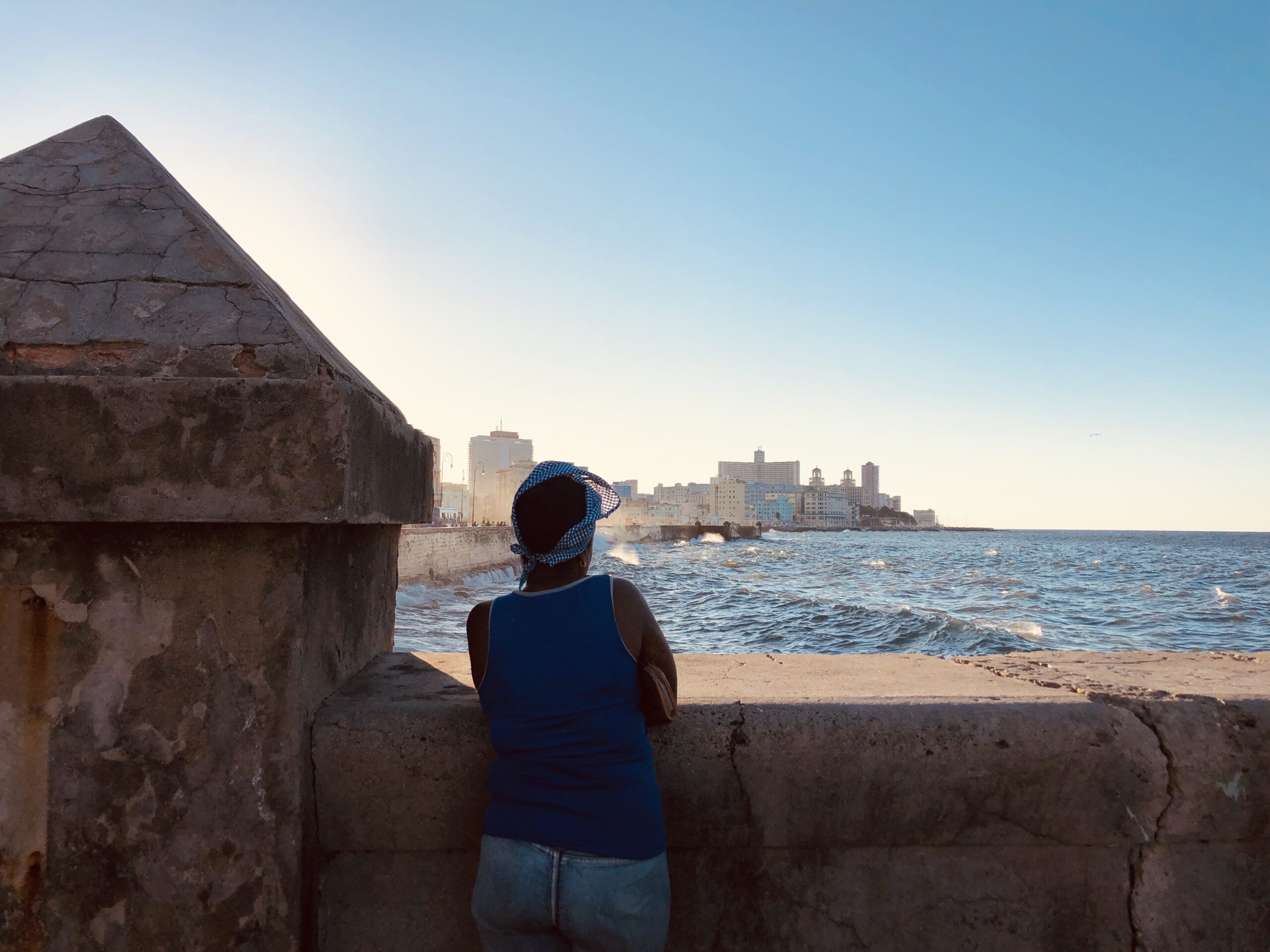
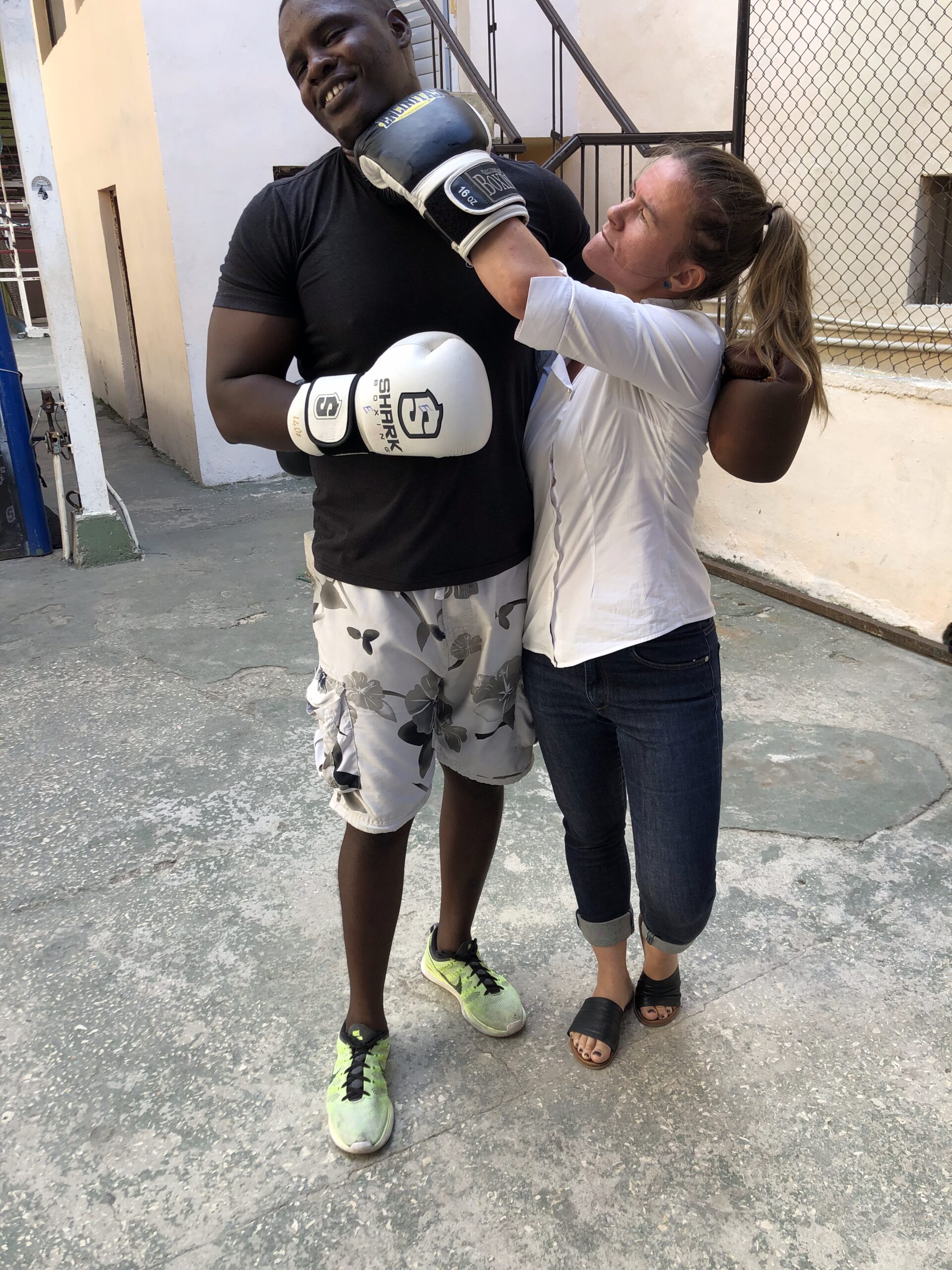
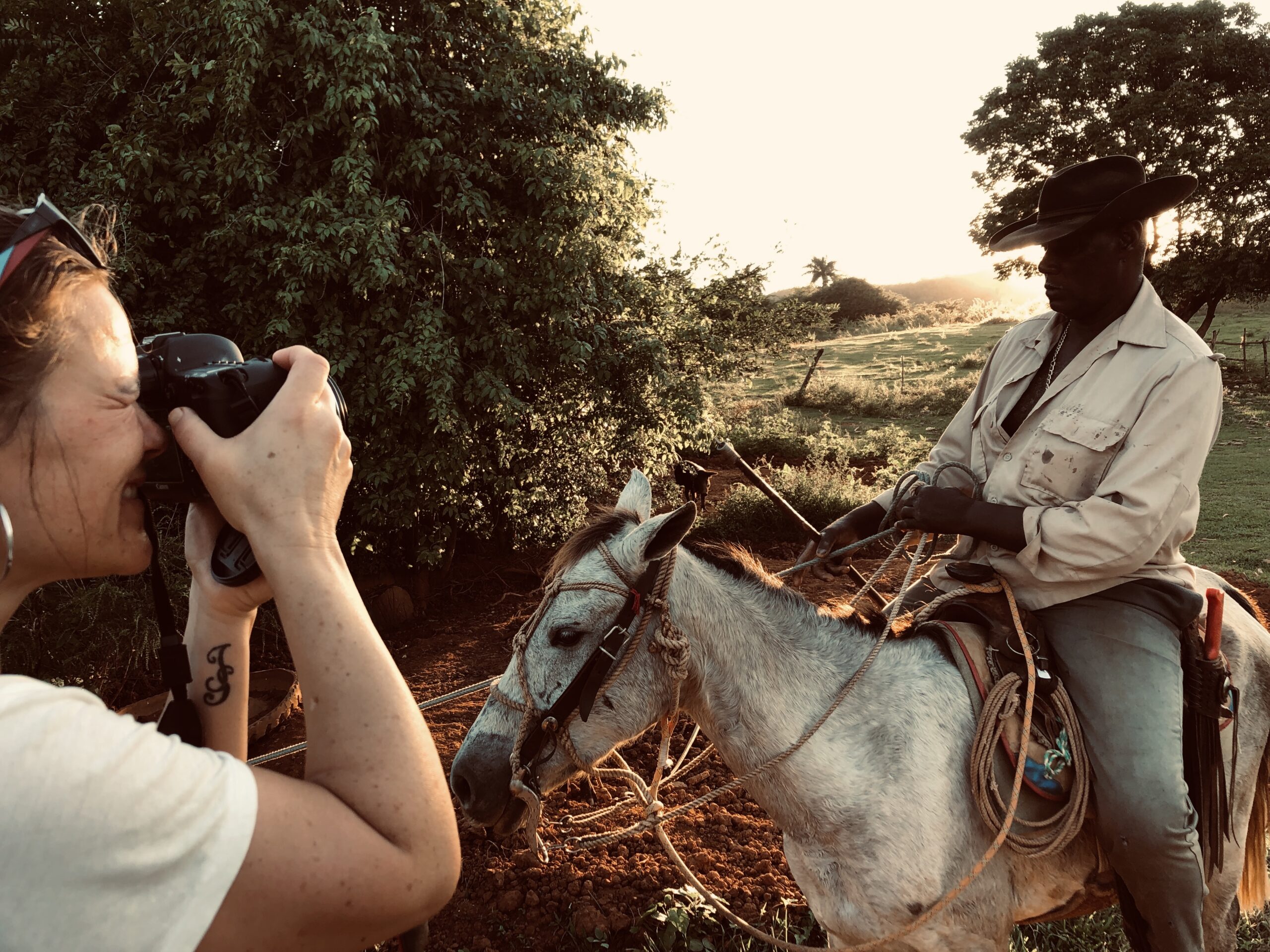
Behind the Scenes.


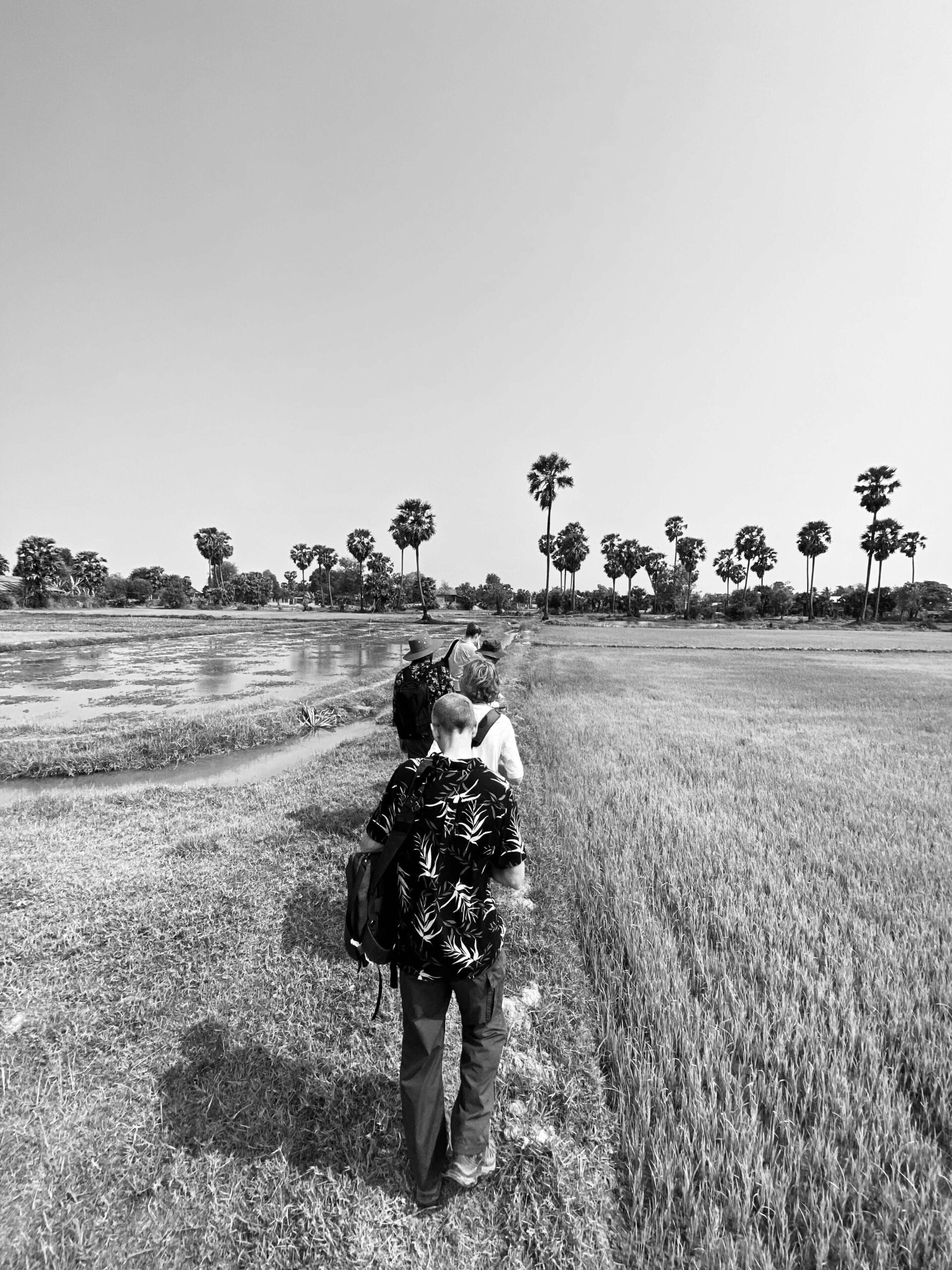
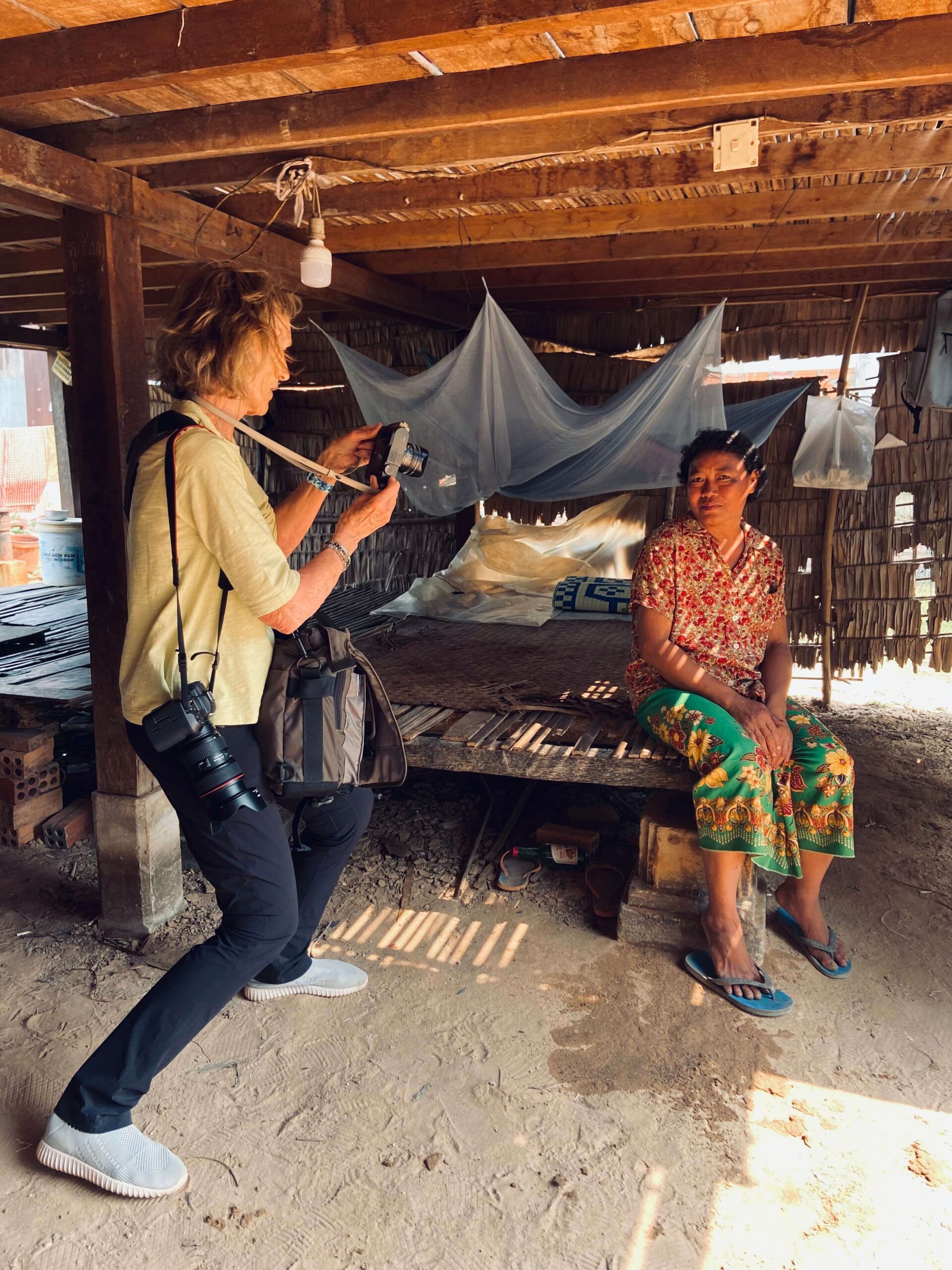
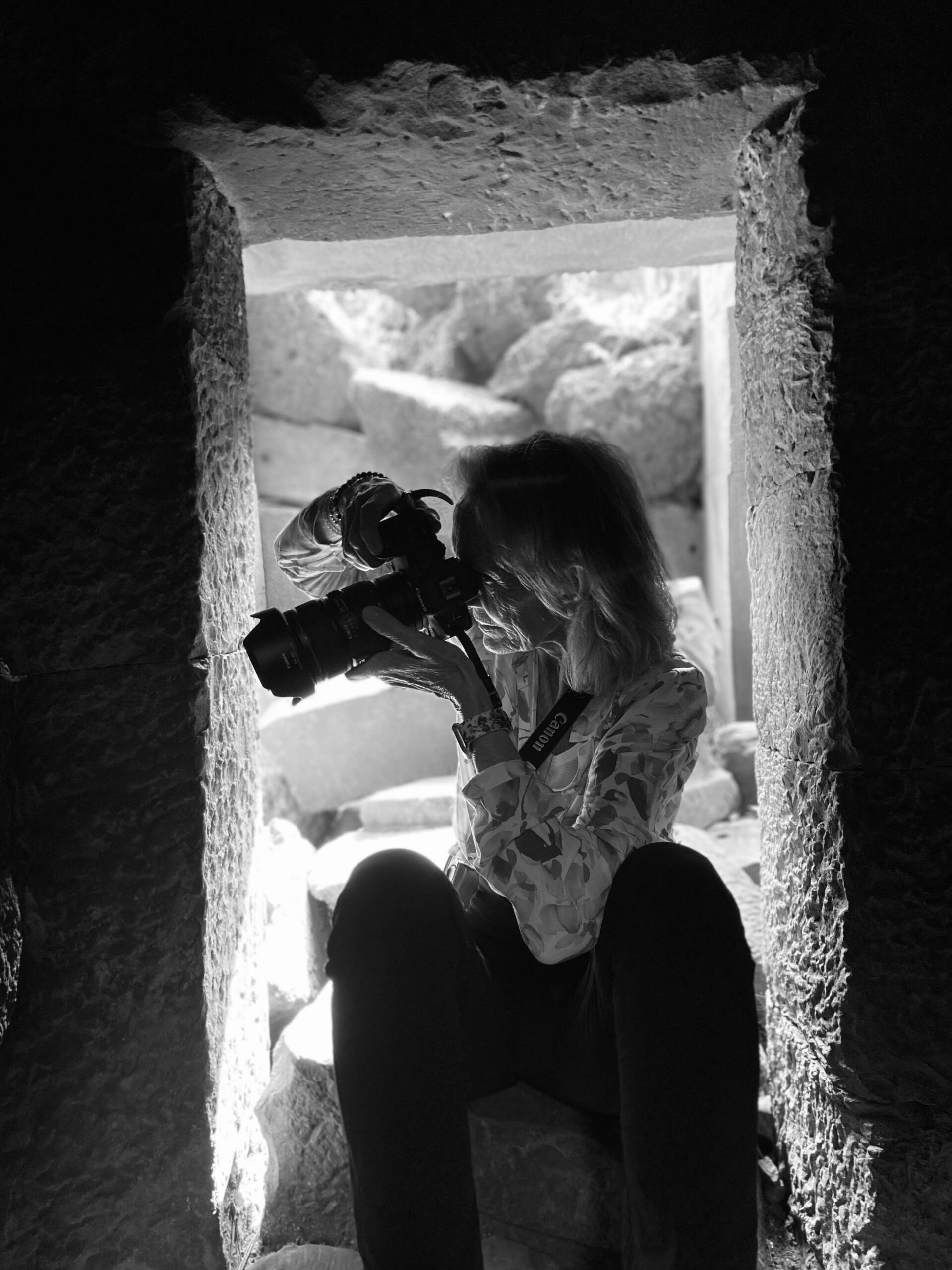

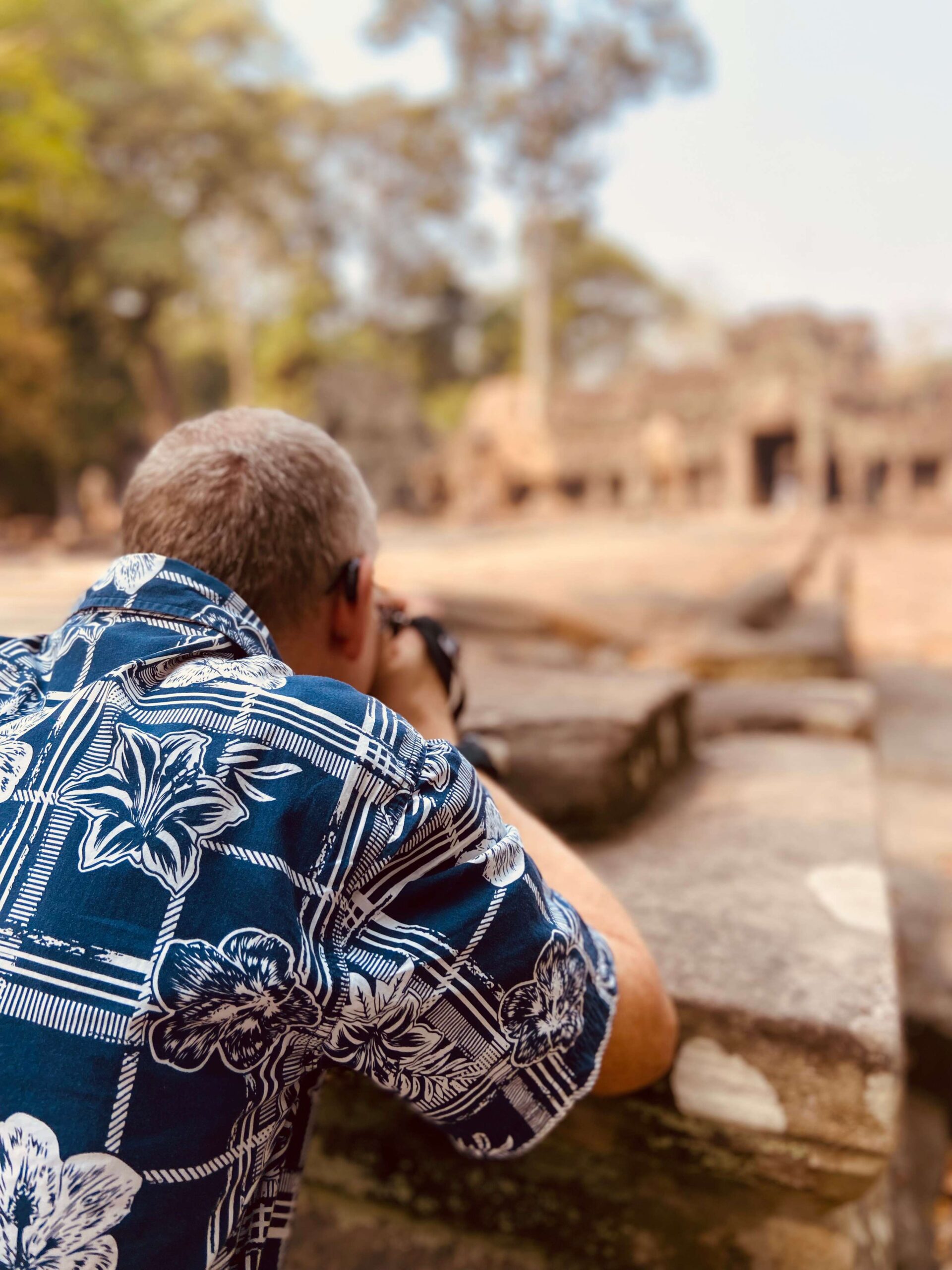


Itinerary.
The flight lands, you clear the airport, and twenty minutes later you’re on the balcony of a converted French governor’s mansion with a drink in your hand. That’s the pace for the rest of the day.
Your guide finds you before the first experience – a few minutes one to one, just to settle what you want from the trip and get comfortable with whatever you’re shooting with. Then into Siem Reap. The old quarter, the river at dusk, Wat Phnom in the late afternoon light.
That evening, dinner at Cuisine Wat Damnak – on Asia’s 50 Best Restaurants list, five courses for £33, in a traditional wooden house. One of those meals that makes you question every other restaurant you’ve ever been to.
You leave mid-morning, after the coach parties have done the sunrise and gone home for breakfast. The bas reliefs first – eight hundred metres of carved stone narrative running around the outer gallery, battles and gods and processions that take as long as you want to give them. Then up. The central sanctuary, the Bakan, sits at the top of steps steep enough that most visitors don’t bother. Up there it’s almost entirely Cambodians: monks in saffron, and women in white – devout lay Buddhists who come here to pray, not to look. The views across all two hundred square kilometres of the complex are, frankly, absurd.
Back in the afternoon. Time by the pool, the spa if you want it. A good way to start a holiday.
Day 3 is spent getting properly under the skin of Siem Reap. The city has more going on than most people give it credit for: colonial architecture, a thriving arts quarter, workshops where traditional Khmer crafts are still being made by hand.
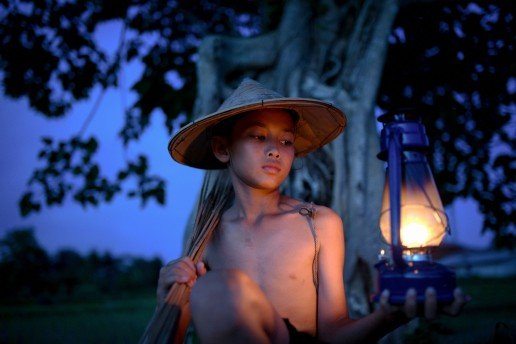
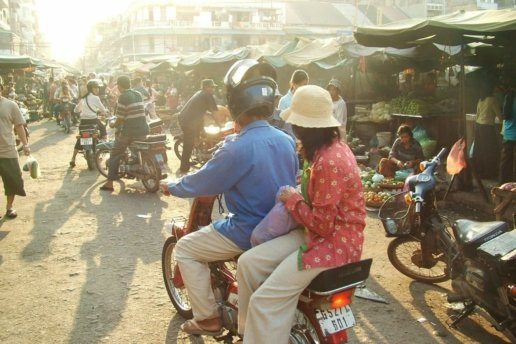
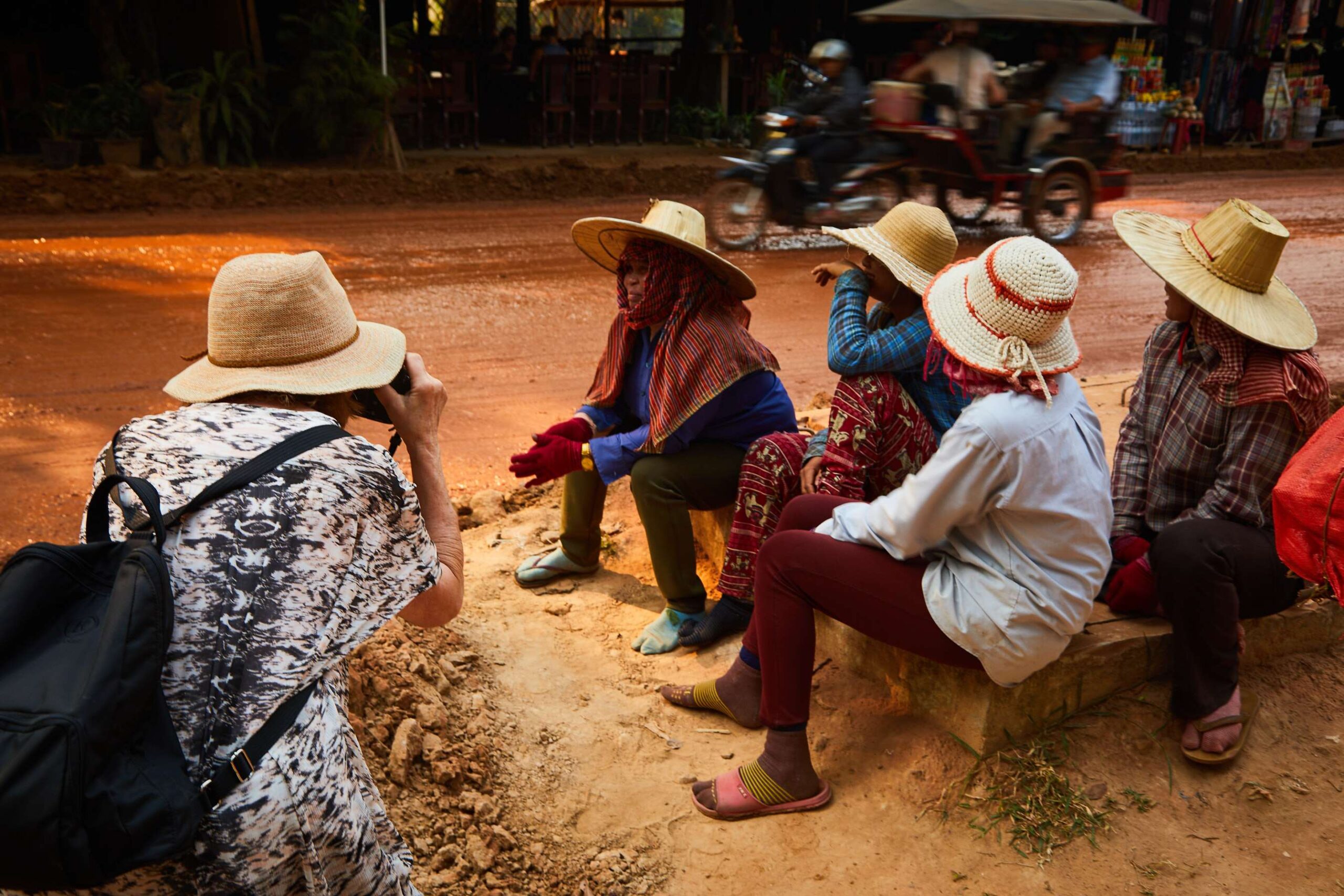
The starting point is Phsar Chas, the central market, where Siem Reap does its actual shopping. Fish, vegetables, herbs, hardware, fabric, all of it across narrow lanes that reward the person who slows down. The camera earns its keep here: the subjects are everywhere and the Cambodian instinct is to smile rather than turn away.
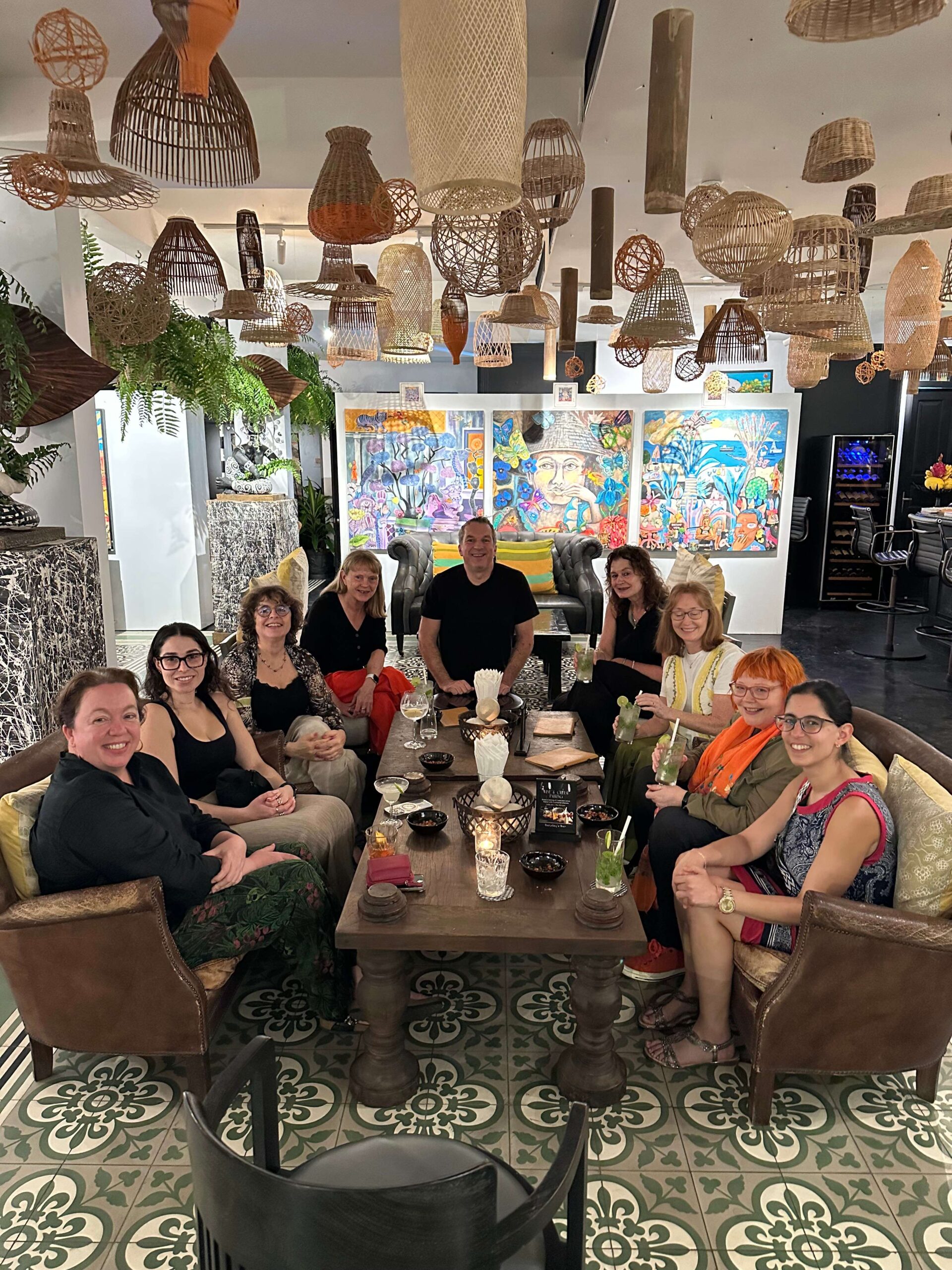
That evening, cocktails at Bensley’s Bar: Shinta Mani’s open-air gin bar named for the hotel’s architect and philanthropist Bill Bensley. Part of every drink goes to the Shinta Mani Foundation, which funds education and healthcare in Siem Reap. One of those places that makes you feel good about having another round.
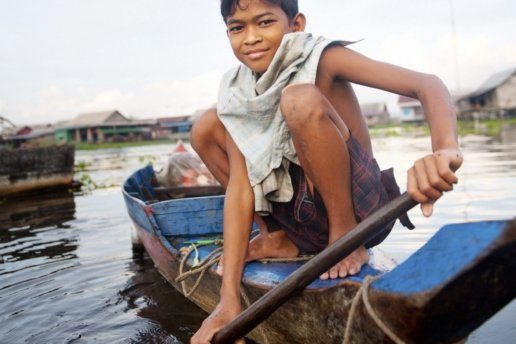
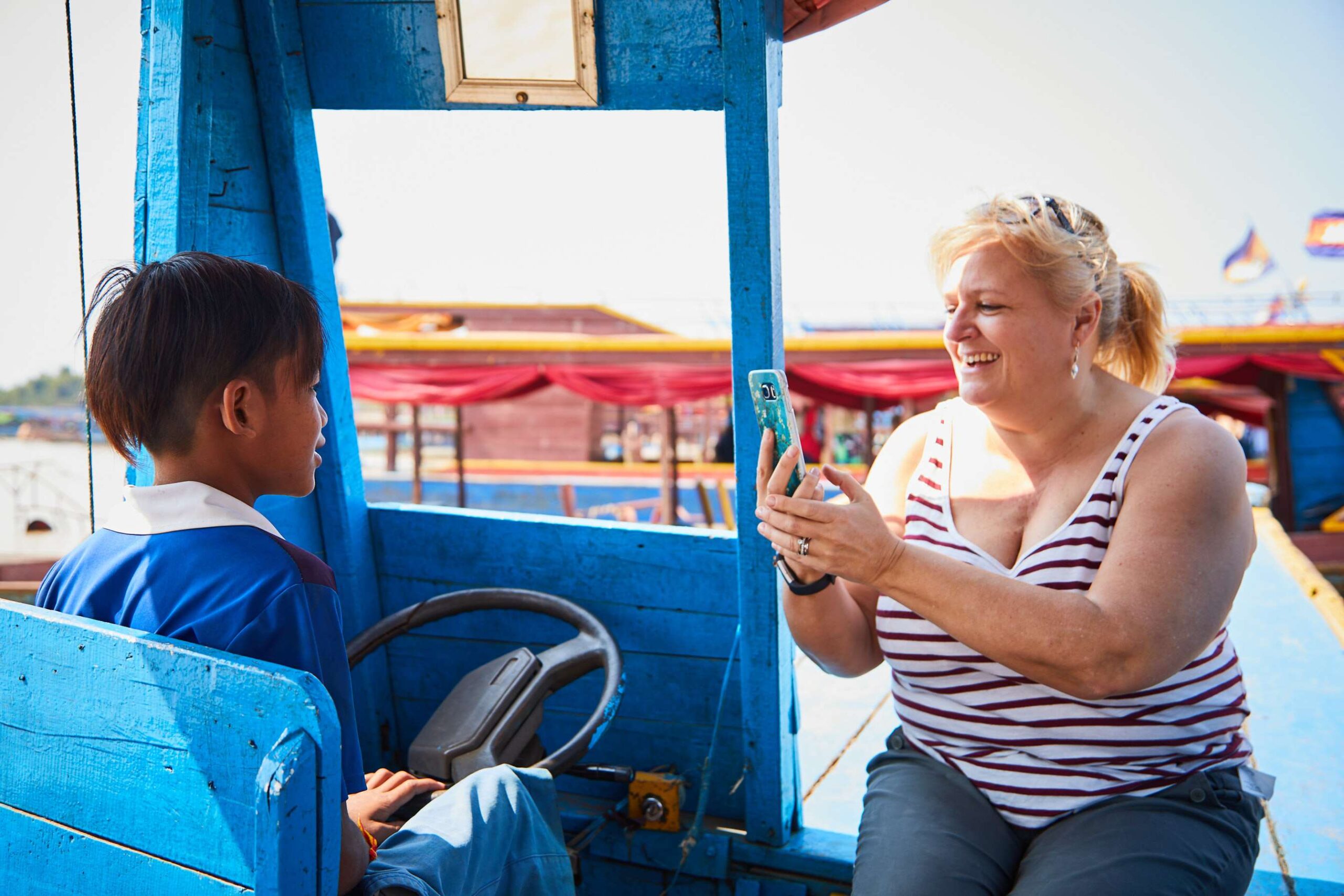
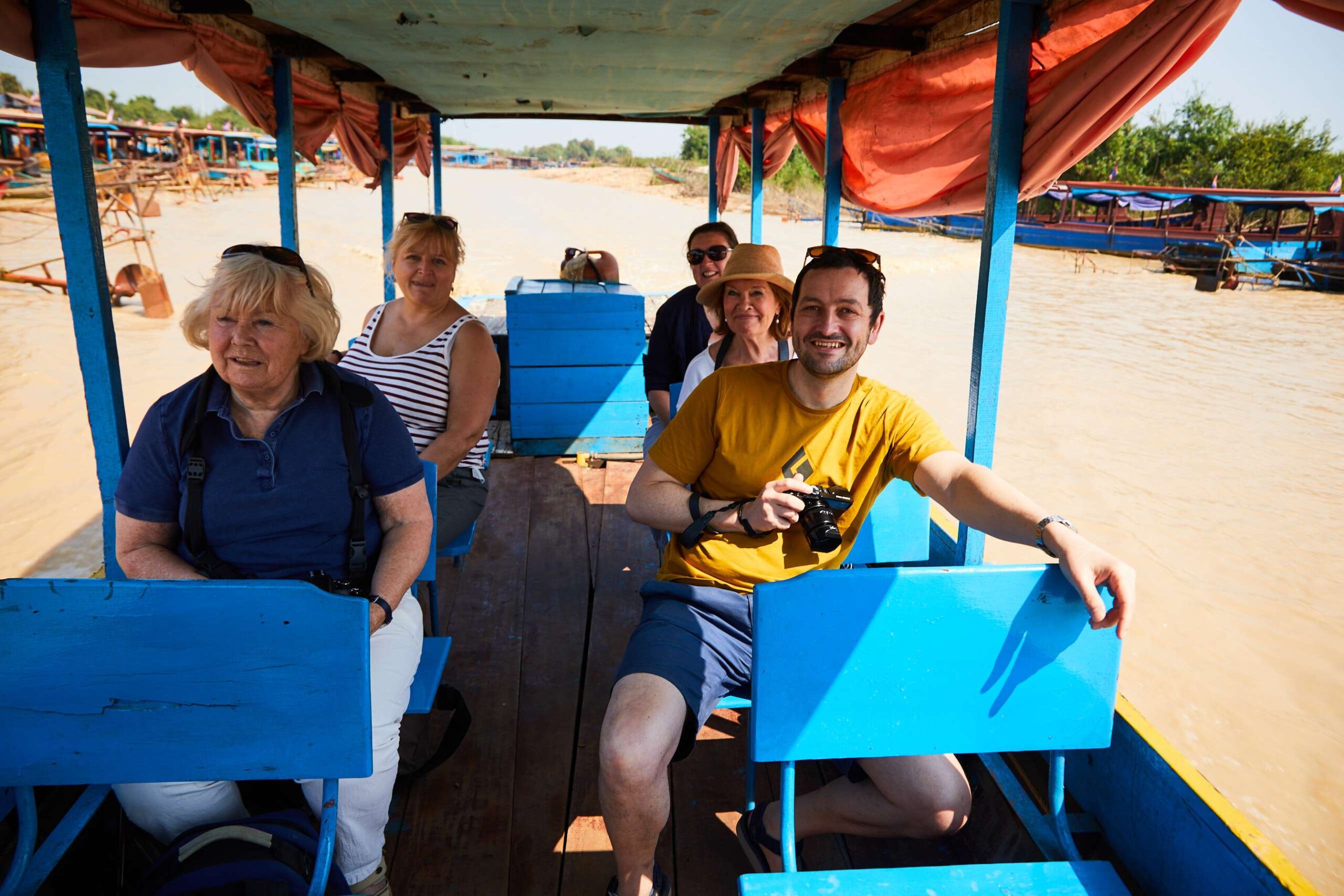
Day 4, out to Kompong Pluk. You board a hollowed-out canoe and move through a flooded forest of mangroves, trees rising out of the water on either side, completely quiet except for the paddle. The village sits on stilts above the Tonle Sap floodplain, houses towering six metres above the waterline. The canoes are run by women from the fishing community. One of those afternoons that’s hard to describe without sounding like you’ve made it up.
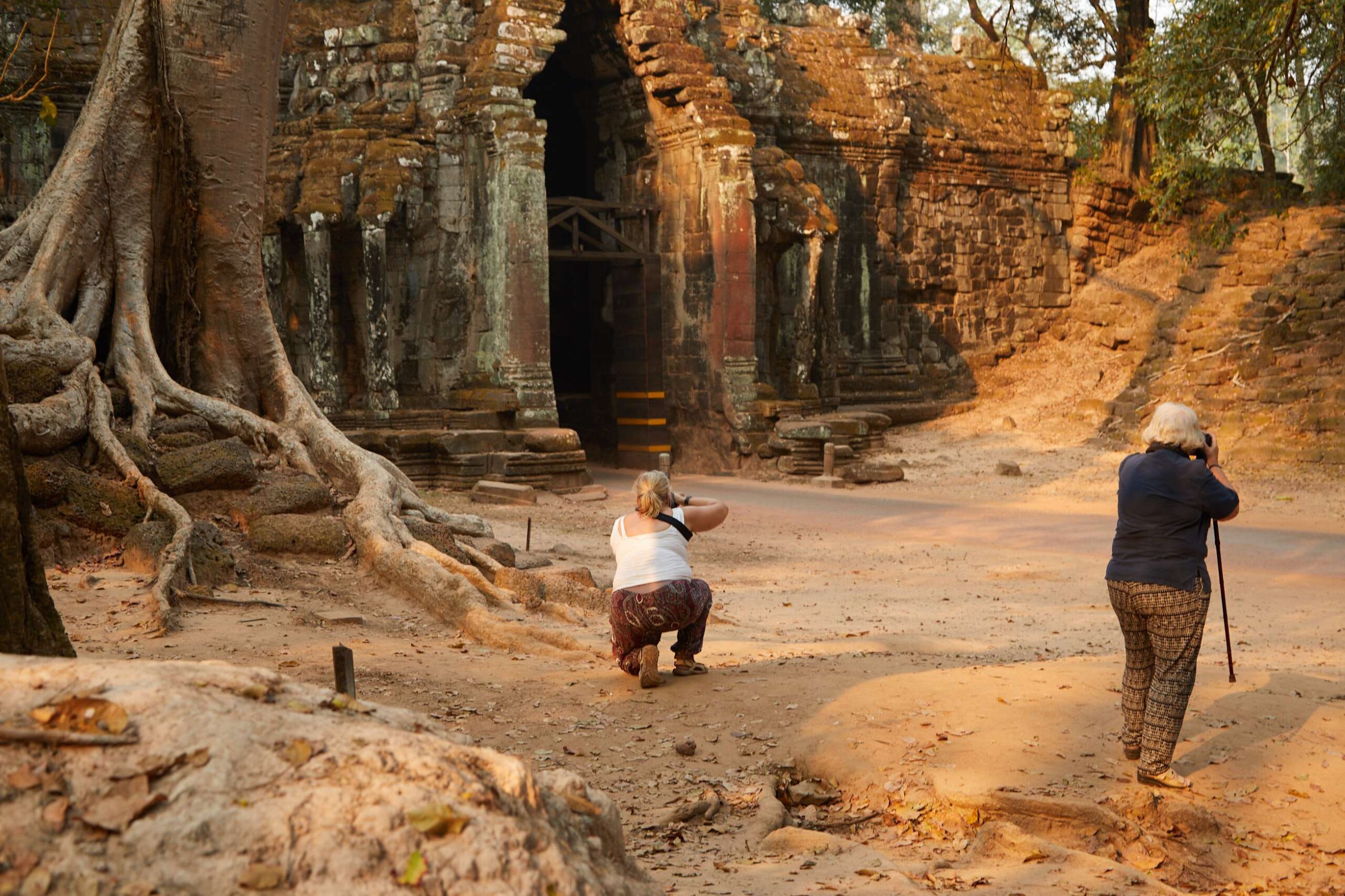
An early start on day 5. Angkor Wat officially opens at sunrise and the crowds arrive with it. We don’t go to the front gate. There are spots in the complex that most visitors never find, accessible before the coaches arrive, where you can have extraordinary light and no one else in the frame. Your guide knows where they are.
Then Ta Prohm. We arrange for a local monk to walk the complex with us: just him, just the group, for over an hour. The silk cotton trees have spent nine centuries pulling the galleries apart, roots the size of cars wrapped around doorways and walls. He’s happy to talk, happy to be photographed, happy to simply wander. There are moments in travel where the hair on your arms stands up. An hour alone in a nine-hundred-year-old jungle temple with a monk who has nowhere else to be. No other visitors. No time limit. This is one of those.
Back at the hotel in the afternoon. Salt water pool, spa, horizontal time.
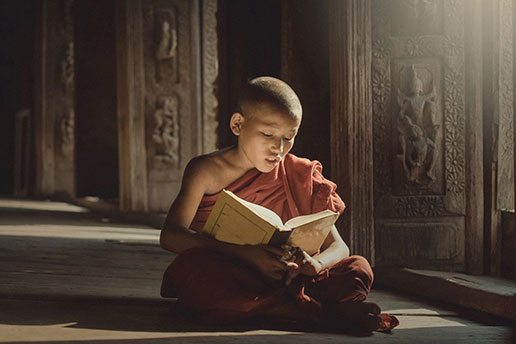
Day 6 is your own until evening. Then a walk to Wat Bo, one of Siem Reap’s oldest temples. Arrive at prayer time and you hear the monks before you see them: a low, continuous chant that fills the courtyard and doesn’t quite leave you when you walk back out.
Day 7 takes you out of Siem Reap with our local NGO partner, an organisation that works permanently in rural Cambodian villages: running schools, providing food, offering training and advice to families who need it. This isn’t a visit to look at poverty. It’s a chance to see the work up close and briefly be part of it, helping out, talking to people, understanding how the operation runs.
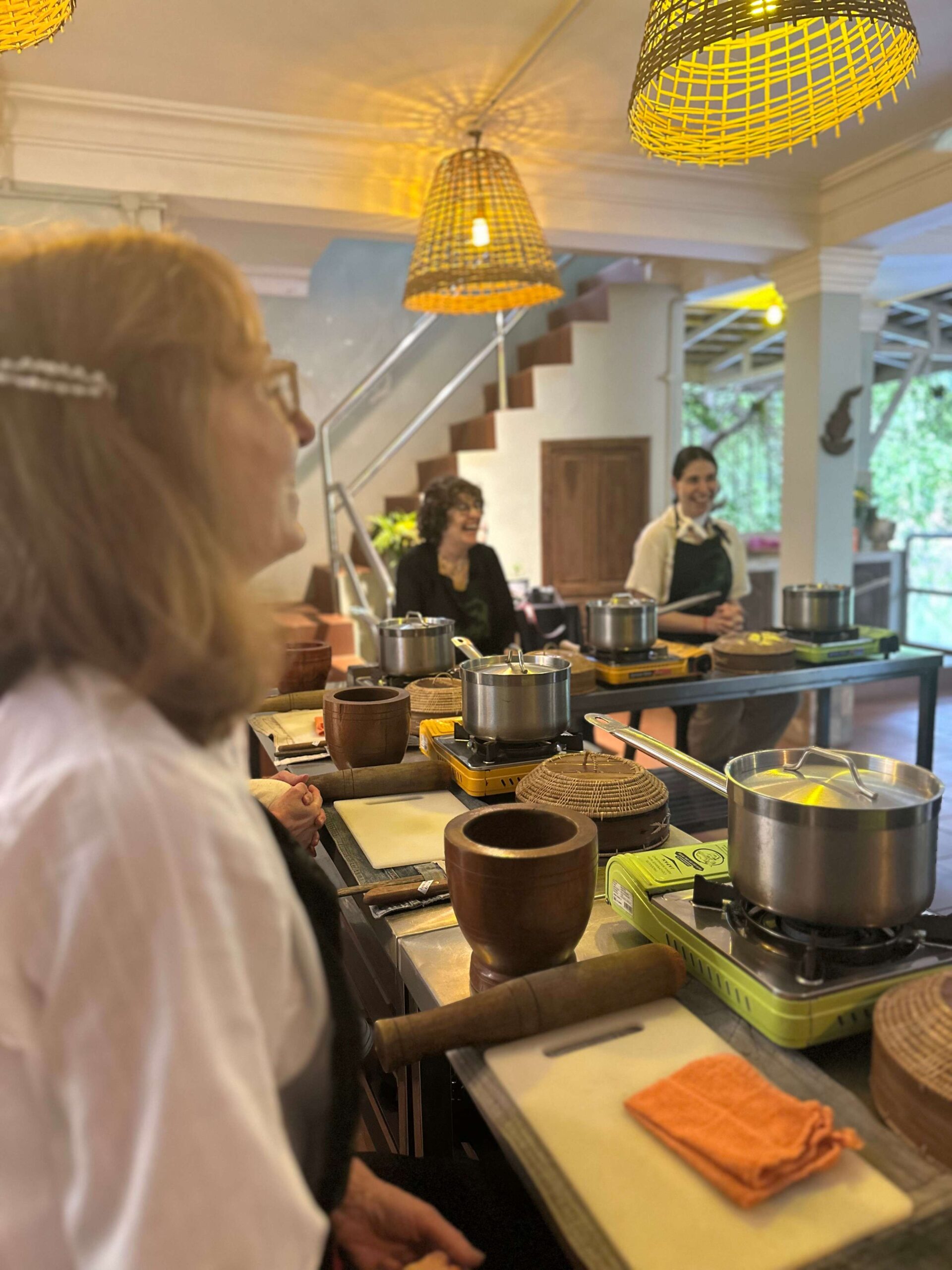
The cooking class in a village stilt pavilion comes afterwards. You make a three-course Cambodian feast from scratch and eat it there. What you pay covers more than your own meal: the surplus ingredients go directly to families in the village who need them. It’s a good system. Simple, but it works.
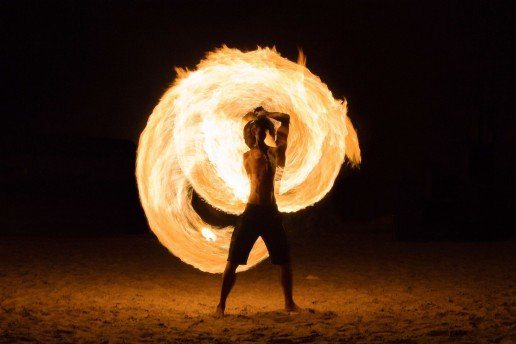
That evening, Phare Circus. We arrive when the performers do: stretching in the wings, costumes going on, makeup being applied, the particular focused quiet that happens before a show. You’re backstage for all of it. VIP seats for the performance itself. Phare trains underprivileged young Cambodians in acrobatics, theatre and music, and puts them on a stage telling stories that belong entirely to Cambodia. Genuinely unlike anything else on the trip.
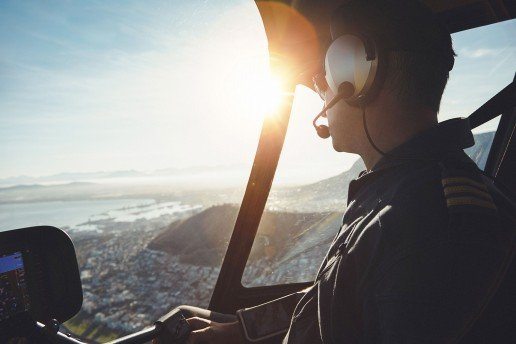
Day 8 starts optionally at dawn with a helicopter above the jungle canopy, all two hundred square kilometres of Angkor spread out below in the early light. For those who go, it tends to settle the question of scale in a way that standing inside the complex never quite does.
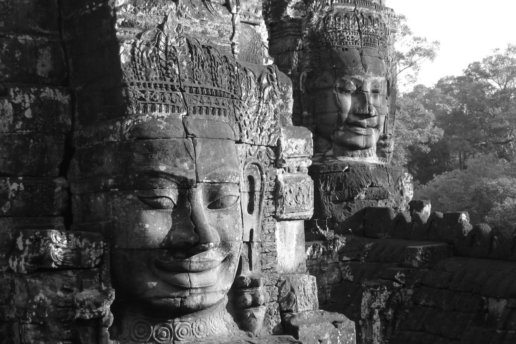
Then three of the less visited temples in the complex: Preah Khan, Ta Som and Bayon. Most visitors to Angkor never reach these. Preah Khan alone was once a city of a hundred thousand people: a Buddhist university with a thousand teachers and a thousand dancers. The jungle has been reclaiming it ever since.
Deep inside Preah Khan, adjacent to the central shrine, is a hidden chamber. Inside it, a jewelled bas-relief carving of one of King Jayavarman VII’s queens: undisturbed, unsignposted, not on any map handed to tourists at the gate. You need to know exactly where it is. Our guide does.
By day 9 you know what you came for. Some guests want to go deeper into the countryside: juvenile monks living in a remote temple, a morning spent quietly in their company with a camera. Some go back to the villages to spend more time with our NGO partners and the people they met earlier in the week. Some head to the big market on the edge of town, or lose a morning in the backstreets they keep meaning to return to.
We put together a tailored plan for each person based on what’s moved them most during the week. There are no wrong answers. A tuk-tuk costs two dollars. Cambodia is generous with its time.
A few things worth knowing about: the silk farm at Artisans d’Angkor outside town, where you can watch traditional weaving still being done by hand. The floating village of Chong Kneas at the northern edge of the Tonle Sap, different in character to Kompong Pluk and worth the journey. And Banteay Srei, a smaller temple an hour north of Siem Reap, carved entirely in pink sandstone with a delicacy that makes everything else at Angkor look rough by comparison. Most guests have never heard of it. Most guests who go say it’s their favourite thing they saw.
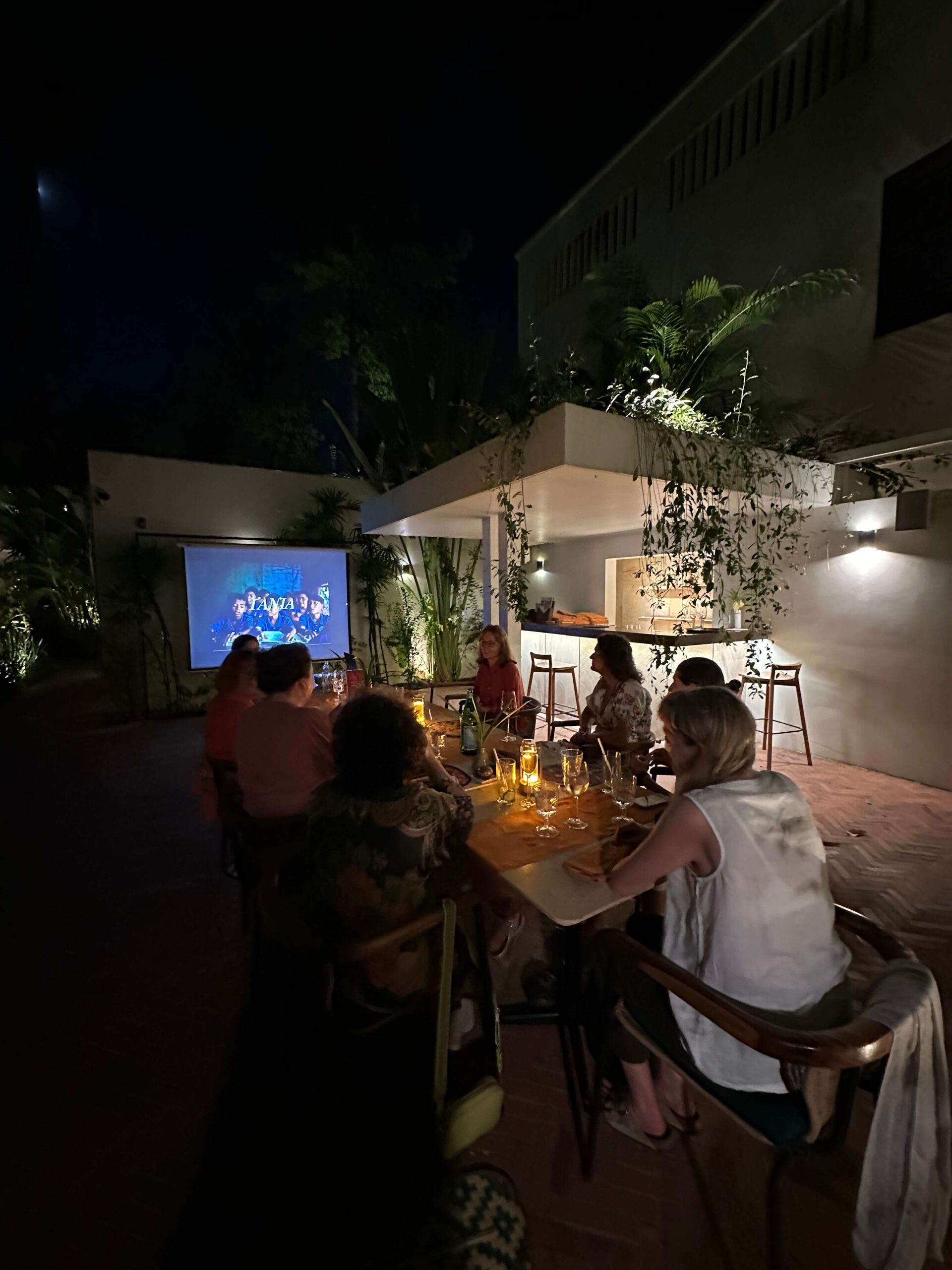
That evening, a private dinner by the pool. The hotel sets it up, the group sits together, and somewhere over the course of the evening someone puts their favourite image from the week on the table. It tends to go on longer than expected. Later, into town.
On the final morning, your guide sits with you one to one: a look back at the week, what you found, what surprised you, what you’re taking home. Not a critique. Just a conversation between two people who’ve spent ten days in the same extraordinary place. Then a light lunch, farewells, and the car to the airport.
You’ll leave wishing you had more time. They all do.

Dates & Prices.
5 – 14 March, 2027
10 days. 9 nights. Starts and ends in Siem Reap, Cambodia.
£3485 / £380 single supplement
Price includes
9 nights boutique accommodation at listed hotel (or similar)
10 days tuition from our UK-based pro photographer/guide
7-day pass to Angkor Wat complex, with guide
All transfers to and from the airport on suggested flights
All transportation between locations
Backstage passes to Phare, the Cambodian Circus
Entrance to NGO village, with cookery class
Boat ride on Tonle Sap lake
1-on-1 guidance throughout
Price excludes flights & meals.
There are no direct flights to Siem Reap from the UK. Most guests fly via Bangkok, Singapore or Kuala Lumpur: all three are worth a day or two on the way. Flights start at around £500. Once minimum numbers are confirmed we will recommend the best options based on price, duration and routing.
One important thing to know before you book flights: we confirm the trip once minimum numbers are reached. We will contact you as soon as that happens. Please do not book flights before we confirm. It protects everyone.

Foreign Correspondents Club.
The old French Governor’s residence, on the river in the Old French Quarter. Michelin Key holder, Condé Nast top 15 in Southeast Asia. Saltwater pool, hardwoods, Cambodian silks. Exactly where you want to be.
I expected to take a few decent pictures. I didn’t expect everything else — the restaurants, the guides, the behind-the-scenes access, the transport, all of it sorted. It meant we could actually focus on Cambodia rather than logistics. Unreservedly recommended.Tania, Amsterdam