
Japan Photography Holiday
Ten days. Tokyo to Kyoto, with a temple stay, a geisha, and Mount Fuji somewhere in between.
Monks at dawn. A geisha under the cherry blossom. Fuji from a rooftop onsen. Nobody comes back from Japan and says it was fine.
Ten days on our Japan photography holiday. Tokyo’s crossing at dusk and a cocktail on the 52nd floor. A Buddhist fire ceremony in an 1,100-year-old cedar forest. Ten thousand lanterns at Torodo Hall. Thousands of vermilion torii gates on a trail most tourists never find. A portrait shoot with a maiko in Maruyama Park. One of our photography holidays for solo travellers: a small group, good hotels, and a camera that gives you a reason to slow down.

WEATHER
19 – 25°C

DURATION
10 DAYS

DEPOSIT
FROM £895

GROUP
CURIOUS ADULTS

GROUP SIZE
MAX 10

DOWNTIME
LESS

HOTEL
BOUTIQUE

PHYSICALITY
ACTIVE
share
An amazing trip to Japan … I came home with images I would not have captured without our tour leader’s local knowledge. Truly an immersive experience – the buzzy backstreet bars in Tokyo, our night-time temple visit, the early morning blessing ceremony, our maiko photoshoot, and perhaps the highlight: the Buddhist fire ceremony. Fiona, Bristol


Highlights.

Behind the Scenes.











Itinerary.
Straight from the plane to a boutique hotel in eastern downtown, where old Edo sits quietly inside modern Tokyo. Your guide spends a few minutes with you one to one before anything else. Phone or camera, it doesn’t matter. By the time you walk into your first experience, using it feels natural.
Day 2. Through fashionable Harajuku – into the cedar forest of the Meiji shrine, where on Saturdays a Shinto priest leads wedding processions through the trees in the middle of a city of 14 million people. Contrast to the energy of Shibuya crossing at dusk, 3,000 people moving in every direction at once. Then up to the 52nd floor of the Park Hyatt, a cocktail, and the view that Bill Murray was staring at. Tokyo earns its reputation.
Senso-ji in the morning. Tokyo’s oldest temple, a five-storey pagoda, trails of incense smoke, the city suddenly quiet around it. We picnic in the grounds. It sounds like a small thing and feels like the best part of the day.
In the afternoon, Akihabara. Electronics stacked floor to ceiling, anime subcultures spilling onto the street, gyaru in platform boots and leopard print who have been dressing this way since the nineties and see no reason to stop. A completely different Tokyo.
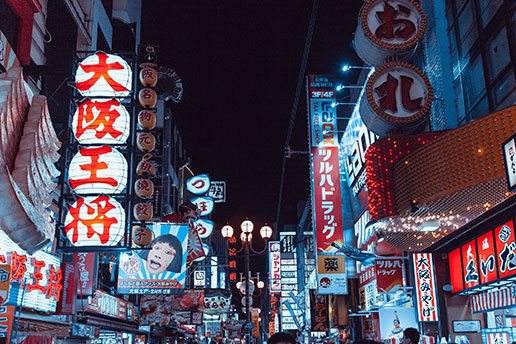
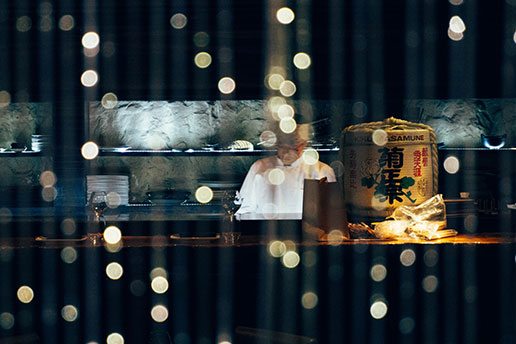
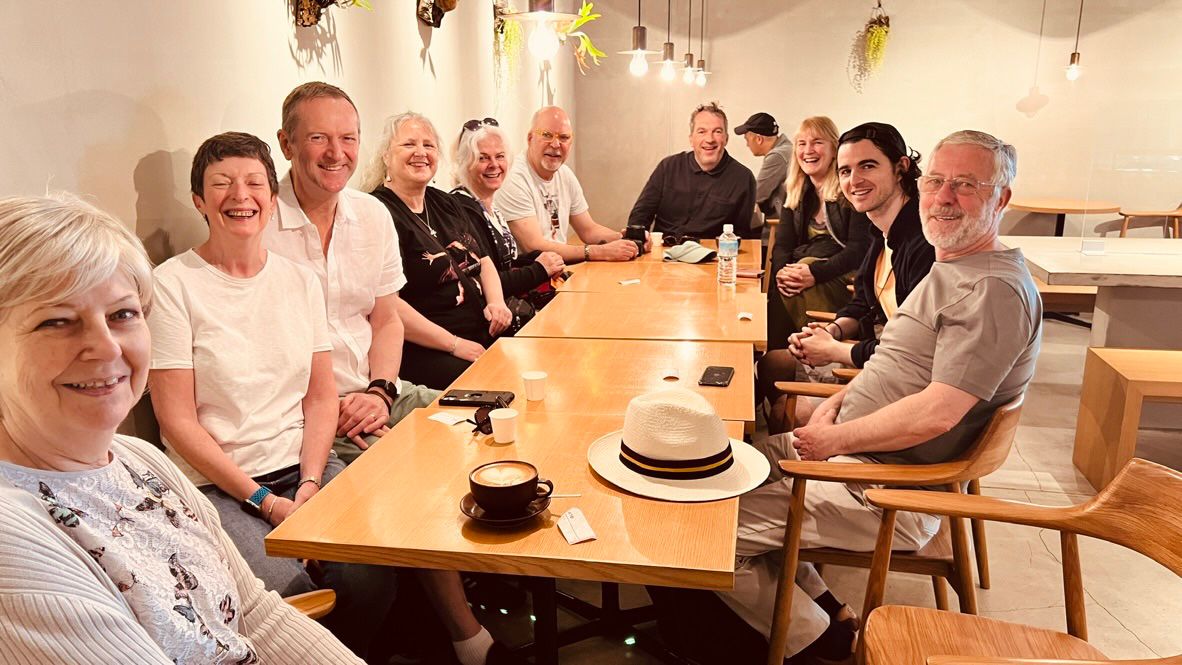
Kabukicho at night, then Golden Gai. A maze of tiny bars that has been here since the fifties and looks like it knows something the rest of the city doesn’t. Find a stool. Order something cold. You won’t want to leave.
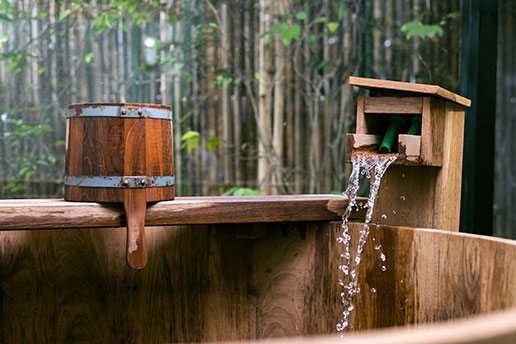
Out of Tokyo and into a different world. The air clears within an hour of leaving the city and by the time you arrive you can feel the difference. The hotel has a top floor onsen fed by natural hot springs, with panoramic views of the volcano. That alone is worth the journey.
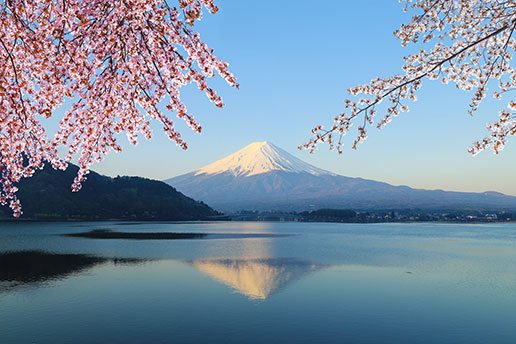
At dusk we head to a spot most visitors never find. No crowds, no coaches, just the volcano turning amber as the sun drops behind it. One of those moments you don’t photograph straight away because you want to actually see it first.
We’ll be back at dawn. Same spot, completely different Fuji. A sacred volcano in the early light looks nothing like it does at dusk. You’ll want both versions.
The morning belongs to Tenzan Onsen. Seven natural spring pools set into a cedar valley above a river, dark wood and stone, the water fed directly from the ground. Optional. Alternatively, the valley itself is worth a wander. It’s all you time, after all.
Then south into the mountains. Koya-san was founded 1,200 years ago as the birthplace of Shingon Buddhism and sits on a plateau surrounded by eight peaks. It arrived at a certain atmosphere somewhere around the 9th century and has seen no reason to change it since.
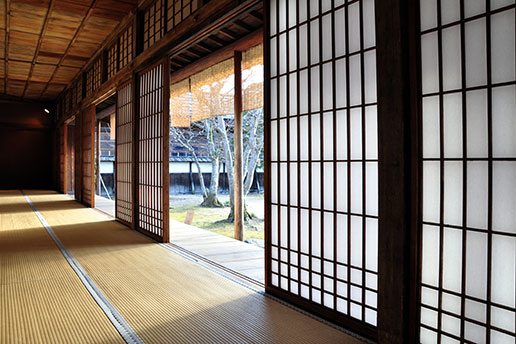
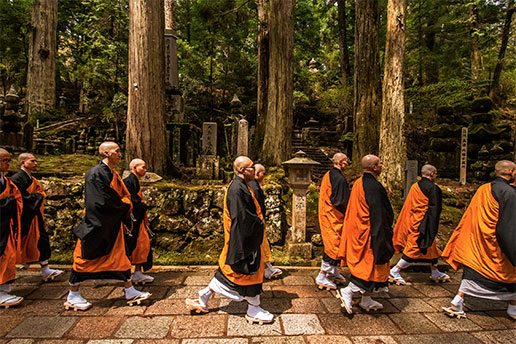
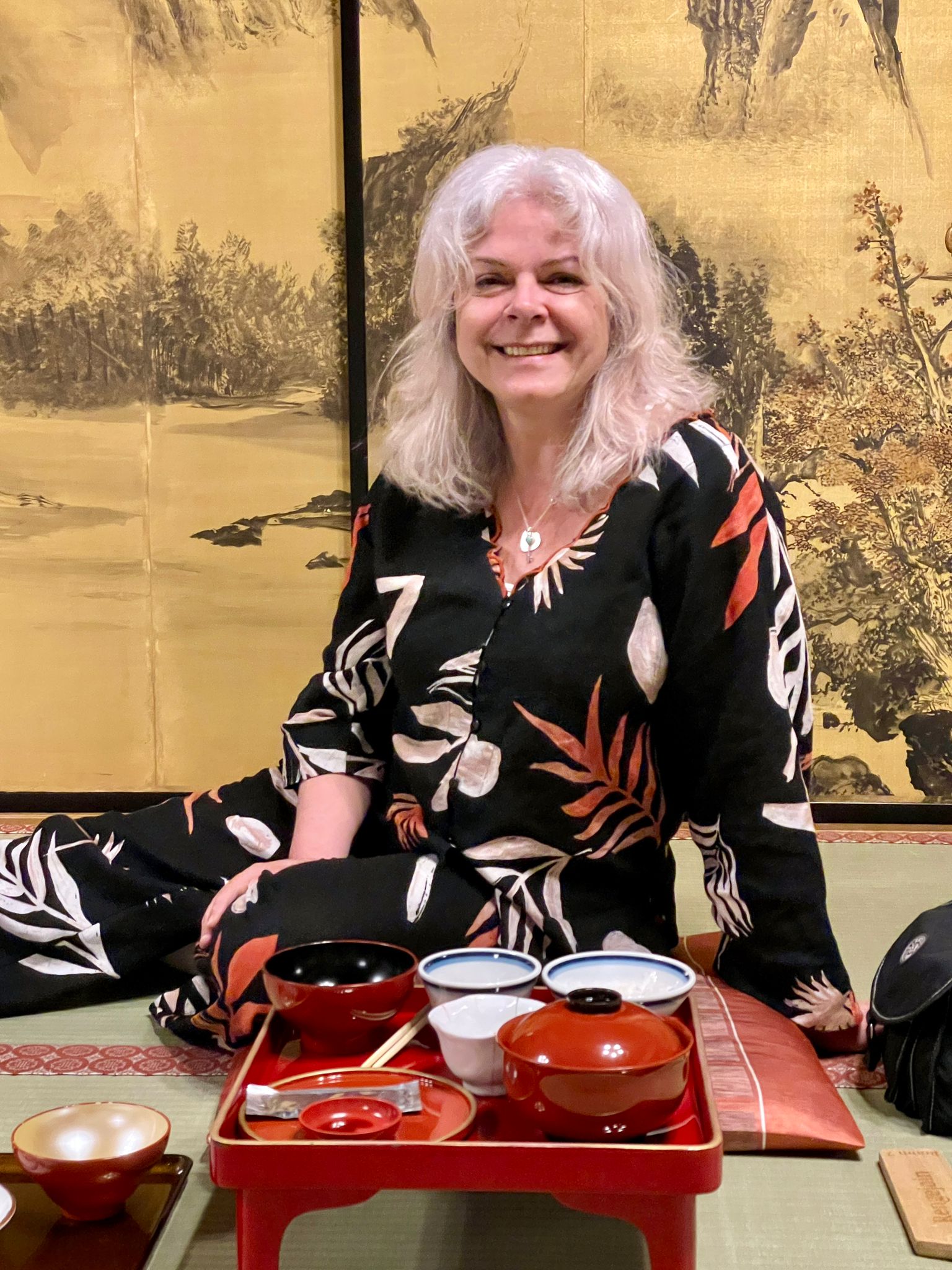
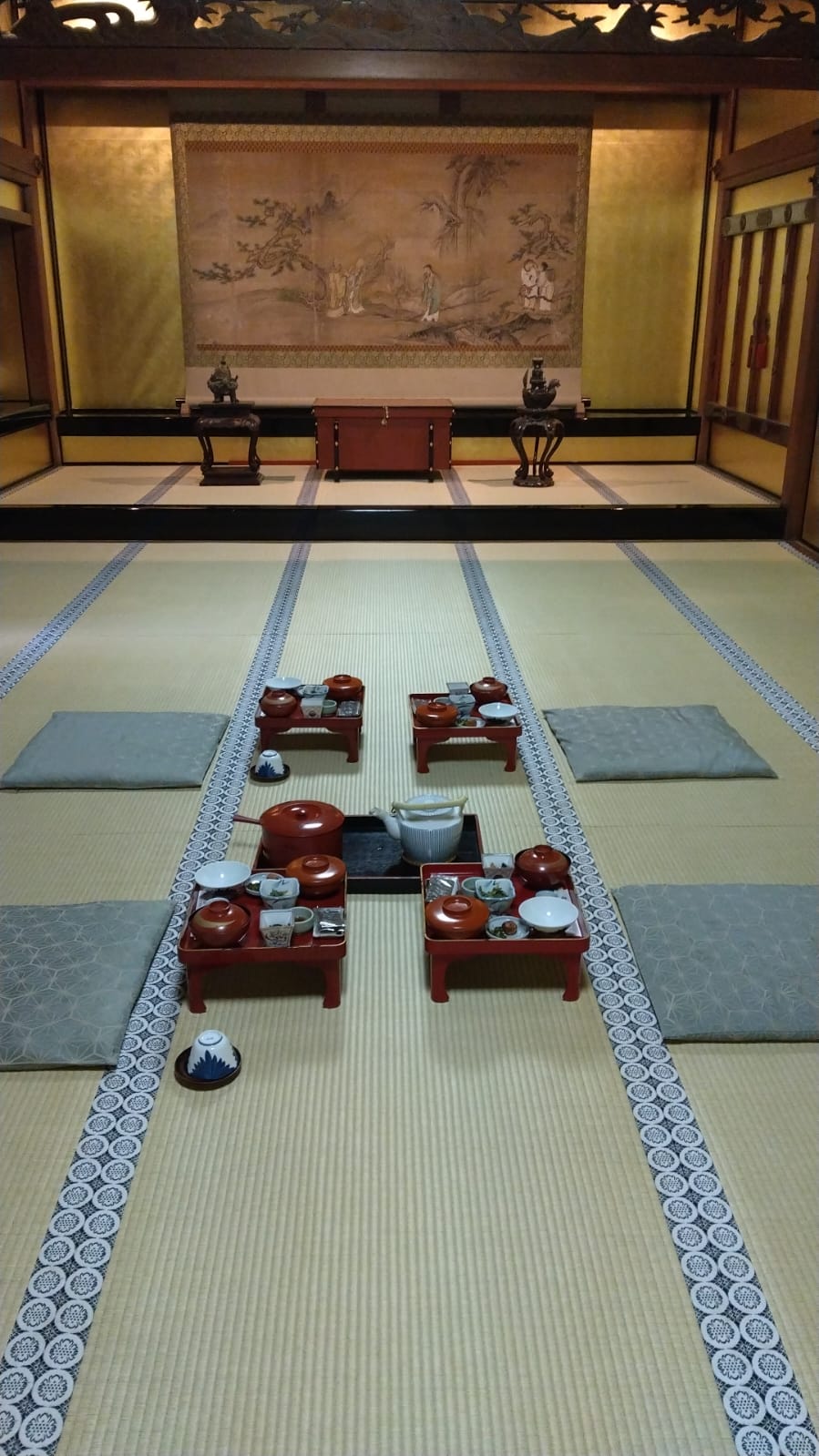
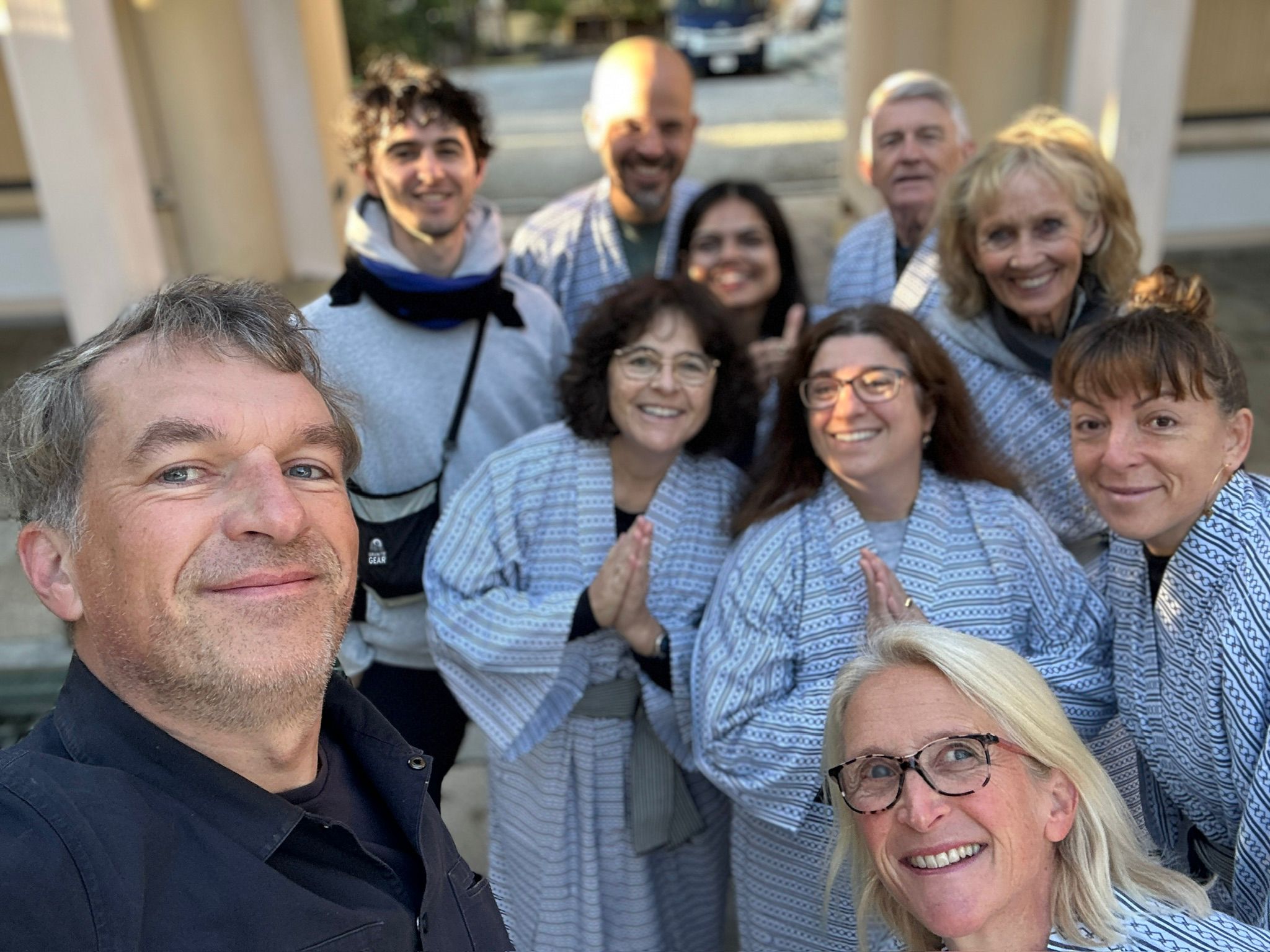
We check into a shukubo, a working temple. Dinner is a multi-course shojin ryori, the vegetarian cuisine of Buddhist monks, served in the great hall on lacquerware trays. Then, after dark, we walk into Okunoin. Two kilometres of softly lit stone lanterns through ancient cedar forest, the cedar trees rising into the night sky above you, the moon somewhere behind them. Ahead, at the end of the path, a glow. Ten thousand lanterns burning around the mausoleum of Kobo Daishi, lighting up the forest from the inside. The rest is complete darkness. Buddhist tradition holds that Kobo Daishi is not dead but in eternal meditation, and monks still bring him meals twice a day. Late at night with nobody else around, it is one of the most extraordinary walks in Japan. Some things are hard to explain afterwards. This is one of them.
Up before dawn. The morning offering to Kobo Daishi is carried through the cedar forest in the pale early light, soft colours where last night there was fire and darkness. A complete contrast, and worth getting up for.
Then the Goma. The Shingon fire ceremony has been performed here for over 1,200 years and exists nowhere else in Buddhism. You write your wishes on a wooden stick. Inside a small wooden temple, the priest feeds them into a sacred fire as the monks chant and the drums build. The flames rise. The smoke carries your wishes upward. Afterwards you meet the monks. It is the kind of thing that stays with you whether you are religious or not.
The rest of the morning is yours. Koya-san has over 100 temples on a plateau in the mountains and most visitors only see a fraction. Wander. It rewards the unhurried.
The morning is yours. Join the monks for the dawn chanting in the temple if you want it, or take the extra hour. Either way, we meet for coffee at Bon On Shya. Véronique and Takeshi have been running this place for years, espresso and homemade cakes in a room that feels like someone’s home, which is more or less what it is. The ceramics on the walls are local. The cakes change daily. The kind of place where you take your shoes off, sink into a book, and lose track of time entirely.
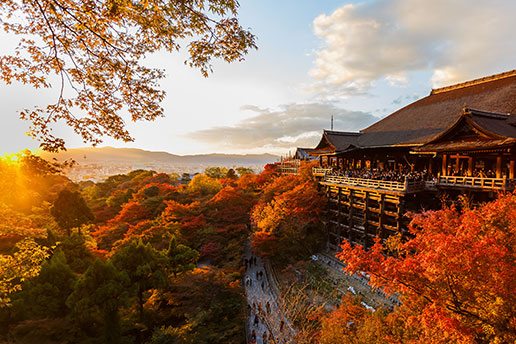
Then north to Kyoto. Japan’s imperial capital for over a thousand years, quieter than Tokyo, more considered, a city that still moves at its own pace. We check into our boutique hotel on Shinmachi-dori, a historic street of traditional machiya townhouses just west of the city’s main drag. Calm without being remote. The kind of base that makes the next three days feel unhurried.
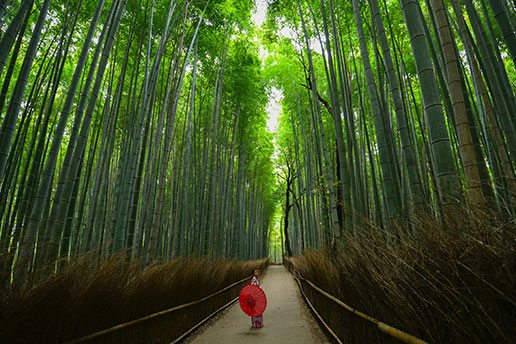
Arashiyama in the morning. Bamboo up to ten metres tall, the wind moving through it, one of Japan’s 100 officially preserved sounds. Occasionally you catch a jinrikisha runner speeding through the bamboo on a hand-pulled wooden cart, kimono-clad passengers in the back, the colours vivid against the green. It looks like a painting and it isn’t. Some places remind you that Japan has been doing this for a very long time.
Then lunch. A local conveyor belt sushi spot where the menu is entirely in Japanese, the robots deliver your order to the table, and there is not a tourist in sight.
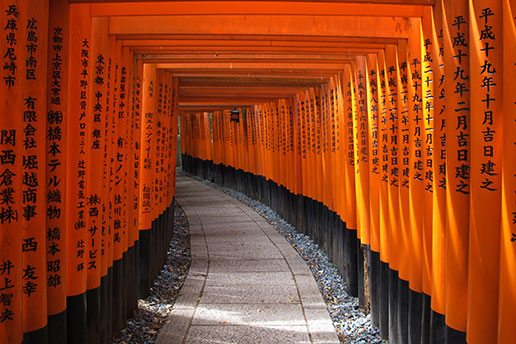
In the afternoon, Fushimi Inari. Thousands of vermilion torii gates climbing a forested hillside. We leave the main trail where everyone else turns back and climb to the peak. At dusk, the colour of the gates does something the photographs don’t capture. After dark, descending through the forest alone, the gates lit against the trees, it feels like a completely different place to the one you arrived at.
Then a cocktail. You’ve earned it.
Nishiki Market first. Five hundred years old and still the beating heart of Kyoto’s food culture, the stalls running deep into a covered alleyway barely wide enough for two people. For anyone who eats, it is heaven.
Then through the backstreets of Pontocho, and on to Maruyama Park. Stone bridges over the Hyotan pond, a small waterfall on the slope above it, and Kyoto’s most famous weeping cherry at the centre. It looks like a woodblock print and it isn’t.
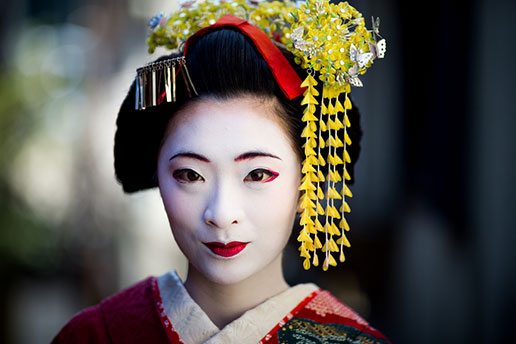
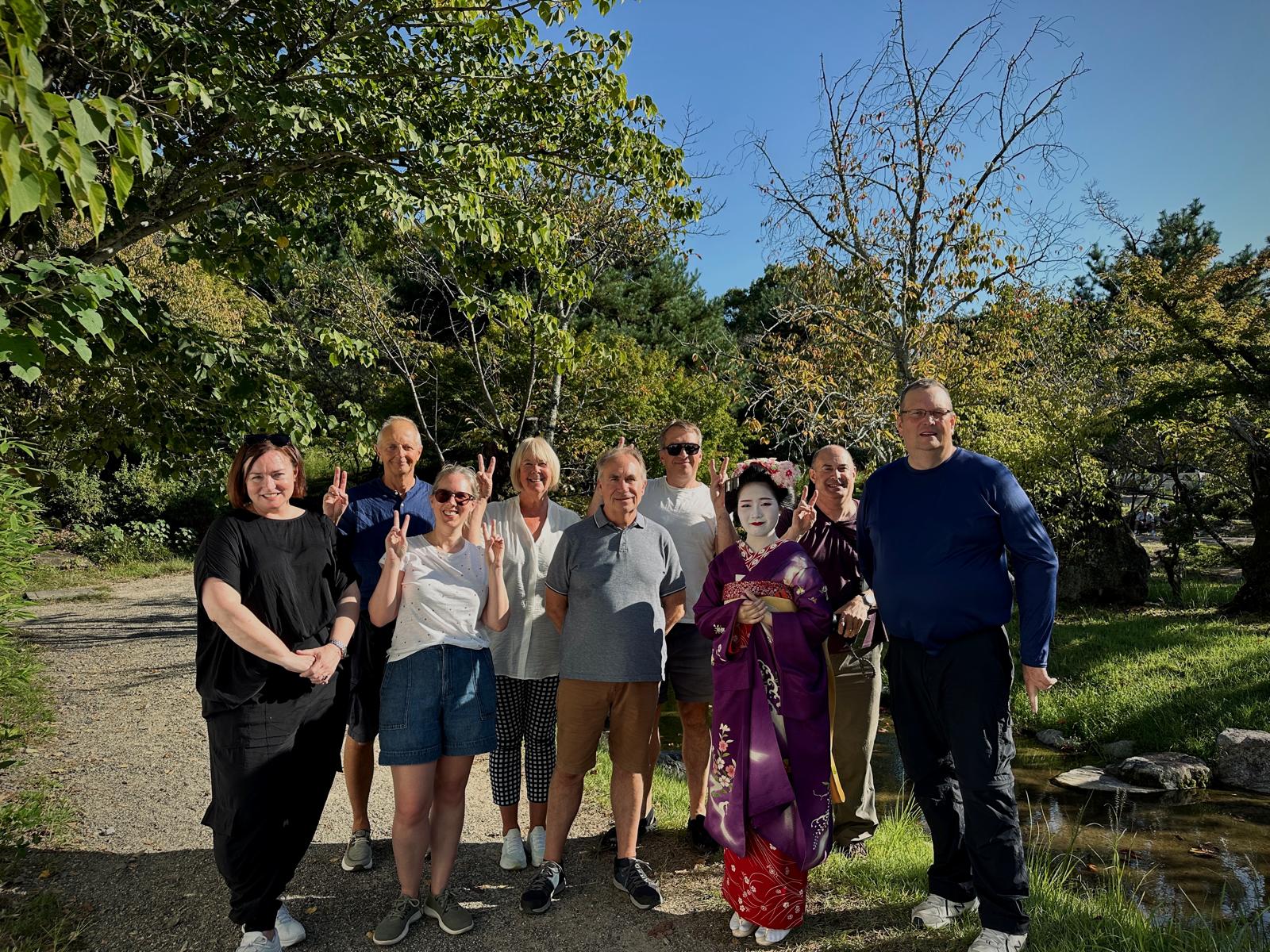
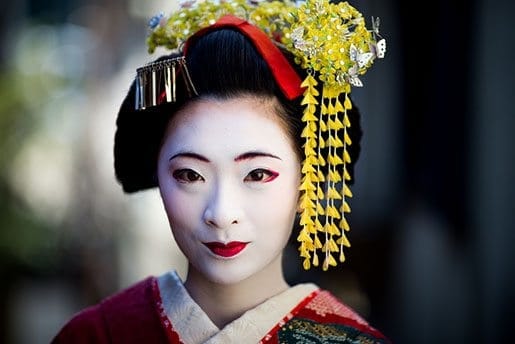
This is where the maiko arrives. There are fewer than 50 left in Kyoto now, a number that keeps falling. She is one of them. We take portraits in the park, talk through an interpreter, spend time with someone who has given her teenage years to one of the oldest traditions in Japan. It is not a tourist experience. You will know the difference.
Afterwards, into Gion. The laws have changed in recent years and Gion’s private streets now carry fines for photography without permission. We keep our distance and we respect it. But watching from the right spot, at the right hour, as a geiko moves between teahouses in the lamplight, is one of the most quietly extraordinary things you will see on this trip.
That evening, dinner together, the week’s best shots on the table, Kyoto doing what Kyoto does at night. It goes on longer than planned. It always does. The final morning. French toast and a matcha latte, some last-minute shopping, a final lunch. Most take the bullet train back to Tokyo. Fuji appears in the window one last time, brief and unhurried, as if it knows you’re leaving. Then home. Not quite the same person who arrived.

Dates & Prices.
16 – 25 October, 2026 (1 left)
21 – 30 May, 2027
15 – 24 October, 2027
10 days. 9 nights. Starts in Tokyo and ends in Kyoto.
£4475 / £380 single supplement
Price includes
9 nights boutique accommodation at listed hotels (or similar)
10 days guided by our UK-based pro photographer
1-to-1 photography guidance, your pace, your level
Portrait shoot with a Maiko, a Geisha apprentice
Group transfers from the airport on suggested flights
All transportation between shooting locations
All entrance passes to Temples & National Parks
Price excludes flights & meals(except Koyasan).
Direct flights to Tokyo Haneda from the UK with British Airways, JAL and All Nippon Airlines, with prices from around £500. We recommend arriving into Haneda around midday on day one so you start the trip with a full afternoon. On the final day, there are evening departures that get you home overnight. British Airways flies the following morning, so some guests choose to stay near the airport and make the most of a full last day in Kyoto before heading out.
The trip ends in Kyoto. You can fly home from there, or take the bullet train back to Tokyo for around £70 one way — one last glimpse of Fuji from the window before you go.
One important thing to know before you book flights: we confirm the trip once minimum numbers are reached. We will contact you as soon as that happens and suggest the best flight options at that point. Please do not book flights before we confirm. We know that feels like an extra step. It protects everyone.

One@Tokyo
Designed by cult architect Kengo Kuma, where the old Edo quarter meets the shadow of Tokyo Skytree. One of Tokyo’s more architecturally interesting places to sleep.
Hotel MyStays Fuji Onsen
Natural hot spring onsen on the top floor with Fuji filling the window. The volcano looks different every hour. Worth waking up early for.
Mitsui Garden Shinmachi
Modern, slick Japanese hotel within moments of all the action, with amazing interior design and onsen with sparkling water.
Fukuchi-In, Kōya-San
A working templestay on a sacred mountain, famous gardens, hot spring baths in cedar forest, and dinner that monks have been perfecting for 1,200 years.
This trip to Japan has been planned for 5 years and various things got in the way. As a result I had built up my expectations and was not disappointed at all. [You] get access to experiences that, as an individual traveller, just wouldn’t be possible. AP, London
Additional information
| Single Supplement - £380 | Yes, No |
|---|---|
| Date | 22 – 31 May, 2026, 16 – 25 October, 2026, 21 – 30 May, 2027, 15 – 24 October, 2027 |