



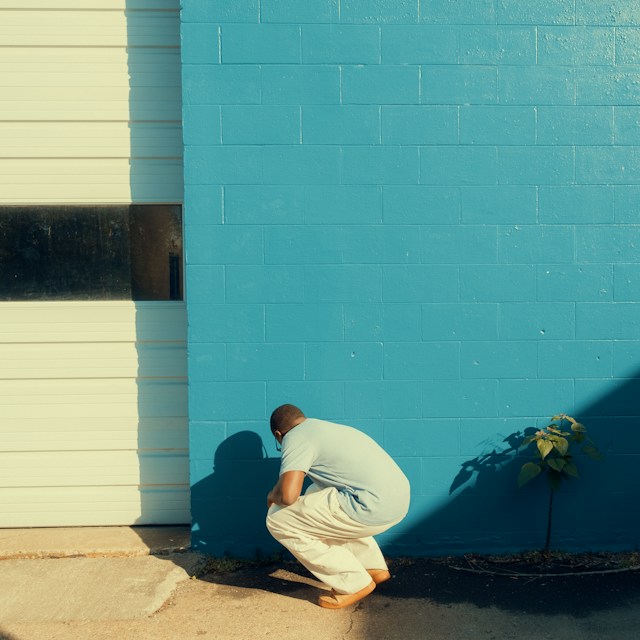
I thought the picture was the point. Then I read about the painters.
There’s an odd detail in a book I’ve been reading.
In the 1960s, the psychologist Mihaly Csikszentmihalyi was studying how artists worked. He watched them spend hours absorbed in a painting. Then, when it was finished, some seemed to lose interest in it. They would put it aside and start on something else.
That raised a question for him. What was so absorbing about making the painting, if the finished thing seemed to matter less than we might expect?
We’ve all felt something like it. You look up and an hour has gone. You’ve been so caught up in what you were doing that you haven’t checked your phone, thought about what’s for dinner, or noticed the light changing. Sometimes you’ve made something you’re more than happy with. Sometimes the result is perfectly ordinary, but you’re glad you spent the time. You might call it being in the zone.
Csikszentmihalyi wanted to understand what was happening in those moments, and whether there were conditions that made them more likely. He began with artists, then looked at people doing all sorts of things: climbing, playing music, chess, surgery. People described a similar feeling of being carried along by the activity. He called it flow.
The name has since acquired diagrams, charts and rather earnest advice about how to get into the zone. The original question feels simpler: why do some activities make us want to keep going, even when there’s no prize at the end?
It isn’t quite the same as mindfulness, though there’s a family resemblance. Mindfulness is often about noticing what is happening. Flow is more active. You have something to do, it asks a little of you, and you become absorbed in doing it. You’re not watching yourself do it particularly well. You’re just there, getting on with it.
That last bit feels familiar. A good walk can do it. So can cooking something that needs a bit of attention, drawing, gardening, or trying to take a photograph in a place you don’t yet understand. You begin with a small intention. Then something catches your eye. You adjust. You try again. The hour goes somewhere.
We’re quite good at asking what an activity produces. Did you finish the painting? Get the photograph? Learn the skill? Have something to show for the time? These are reasonable questions. They’re also a way of missing what might have been good about the time itself.
A hobby can become another small job if we insist on measuring it. The sketch has to improve. The walk has to count towards something. The photograph has to be worth keeping. It’s possible to spend so much time judging the result that you barely notice the pleasure of making it.
Travel has its own version of this. We arrive somewhere unfamiliar and feel we ought to take it all in. The sights, the food, the history, the light. A camera can become one more way to collect evidence that we were there. But it can also give us a modest reason to stay with one thing for a little longer. The way the light falls across a wall. Someone’s hands at work. The scene that seemed ordinary until we stopped and looked.
The picture may be good. It may not be. Either way, you have spent a while paying attention. That counts for something, even if it doesn’t make it into the album.
I don’t think the lesson is that we should all try to find flow, as if it were a place we could book a ticket to. It sounds exhausting to turn enjoyment into another thing to achieve. Maybe it’s enough to notice which activities make us forget to check the time, and give them a little room.
The artists in Csikszentmihalyi’s study were not indifferent to their paintings. They had worked hard on them. But perhaps the pleasure was never stored only in the finished object. Some of it had already happened, while they were making it.
Maybe that is reason enough to pick something up again.

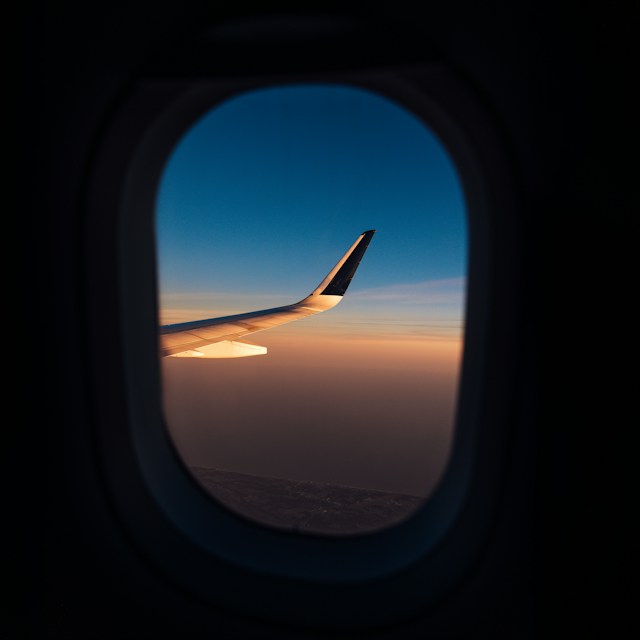
I wanted the trip to be worth it, even if I didn’t gel with anyone
On the flight to Sicily, Rebecca had been trying to be nice to everyone. “I remember feeling I should be nice to everyone in the flight, because I had no idea who, on the plane, I was about to spend five days with.”
She had booked alone, but she wasn’t looking for a test of her ability to make friends. She wanted a trip that would be worth the money even if she didn’t gel with the group. The itinerary and experiences mattered. So did the one-to-one photography. They gave the holiday a reason to be there beyond the company.
“I did consider just heading somewhere by myself,” she said. But she liked the “safety in numbers” and not having to stress about the practical details. She also worried that five days with strangers might be tiring. “I’m not a natural ‘networker’.”
That worry is easy to understand. A group can be a lot of people to meet at once. The usual advice is to be open, get out of your comfort zone, talk to people. It can sound like being assigned homework before you’ve even unpacked.
Rebecca’s first photography session was deep in the Ballaro market in the backstreets of Palermo. No introductions exercise. No one asked what anyone did for a living. There was a subject in front of them, and something to try. At dinner later, “Conversation was easy, we got so caught up in the market, we all had something to share. The table was buzzing”.
She noticed that even the more experienced photographers had questions. “If they still had questions, then it’s absolutely fine that I do. Like … what the hell is a histogram?” The point was not to prove you knew your way around a camera. It was to look, have a go, and see what other people saw.
By the drinks after dinner, Rebecca had begun to relax. The next morning, she tried taking a portrait of a local with red hair. Rebecca took her picture and thought: “I can do this. I get it! Let me loose to do more.”
Looking back after the trip, she said “It really is the in-between bits I remember most”.
“Creating the Spotify playlist [when we traversed the island], where we each put in 5 of our faves, which sparked some interesting conversations.”
“Sharing food … gosh there was a lot of food sharing, with people you’d only known for five minutes. And then, that final dinner … we were all so relaxed and joyful.”
“Reviewing photos at the end of the day was brilliant at showing how differently we all see and the things that gave people inspiration, and didn’t, after all, feel intimidating … it helped unlock how you see the world.”
“Doing stuff the locals do, and eating at places where the locals go is what I’ll remember. The sea swimming in Ortigia! All restaurants.”
Rebecca had booked a trip that would still be worthwhile if she didn’t gel with anyone.
She’d worried five days in company would be exhausting.
“It wasn’t. It was energising.”
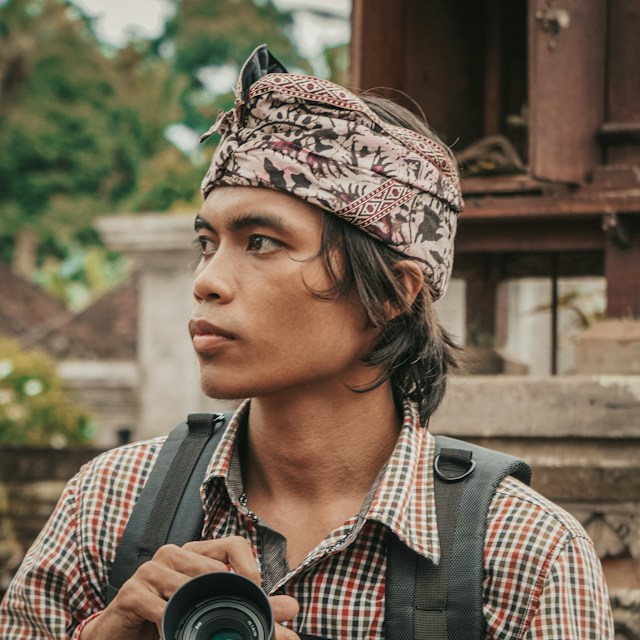
I came all this way. Why am I trying to record it instead of just being here?
The moment something catches my eye, I feel two impulses: look at it, and make sure I can keep a record of it. The phone comes out. I take the picture. I check it. Maybe I take another.
I tell myself I’m doing it so I’ll remember. But I probably won’t. Like the several thousand other shots locked up in the cloud, it may not see daylight again for years. Maybe never.
Another moment comes along down the road, and it happens again. The camera swings up. Later, at the end of another day ticking down my ever-so-precious time away, I reflect that I’ve spent most of the day looking at the back of a screen. Not taking in what was actually there, but spending most of my energy snapping a moment I probably won’t remember, and won’t look at again.
It’s a small habit, and an understandable one. We want to hold on to good things. But it sits alongside another habit: turning time into something to get through. The next meeting, the next task, the next place on the list. It’s easy to bring that pace on holiday. See the sight. Take the picture. Move along.
It isn’t only the camera. Most of us have got used to living at a pace where something is always waiting: a message, a deadline, a delivery slot, somebody asking where we are. Work has crept into the hours around work, and the phone makes sure the small gaps in the day don’t stay empty for long. Even rest becomes something to optimise. We arrive on holiday with a list, a charger and the feeling we ought to make the most of every minute. Then we find ourselves hurrying through the very thing we saved our leave for.
We’re good at carrying that logic into our free time. We plan the day, make the most of the trip, get the evidence, and come home with something to show for it. Even a hobby can become another measure of whether we’re doing well.
Photography can be caught up in that. We want a good picture. We want to know what we’re doing. We want to come home with something worth keeping. There’s nothing wrong with that.
But what if the picture isn’t the only thing photography gives us?
~
We take the picture because we want to remember.
Then, somehow, we leave the remembering to the picture.
At every turn, another view to collect. The camera becomes a photocopier: click, check, next. We come home with hundreds of images and, when someone asks what we did, find ourselves scrolling through them for an answer. We’ve recorded the holiday. That doesn’t always mean we’ve taken it in.
Memory isn’t an inventory. We don’t need to keep all 48 things we saw. We want a handful of good stories. The camera can help us keep them, if we give ourselves time to work out which moments are worth keeping.
So put it down for a while. Stay with the place. Let the rush to see the next thing subside. Notice what you think and feel. Most moments will pass without asking to be photographed. A few will stay with you.
Try using it differently. Sit down. Look about. Wait for the thought, or the feeling, to turn up. Then make a photograph of what brought it on.
At the Taj Mahal, it needn’t be the great marble set piece. It could be the river behind it, because sitting there made you feel calm. Later, the picture won’t just say, “This is what the river looked like.” It might bring back the stillness, the heat, the time you gave yourself to sit there.
That’s a more personal way to practice photography.
We’re not short of pretty pictures.
We’re short of pictures that mean something to us.
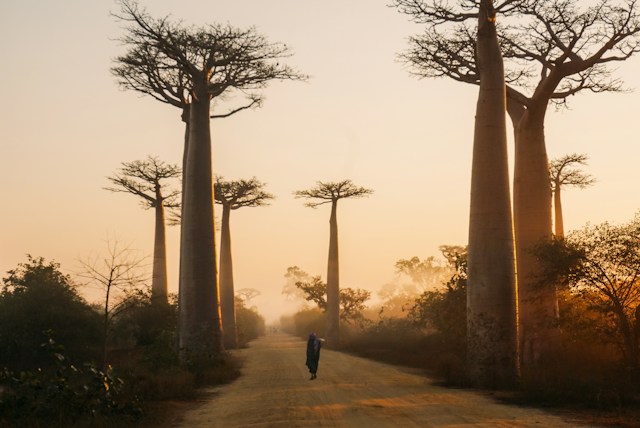
Every trip counts towards the next.
Every November, we bring back our Loyalty Reward as a little thank-you to everyone who’s travelled with us before.
The more trips you’ve completed, the more your reward adds up. And yes, there’s no cap. If you’ve been away with us ten times, all ten count.
I hope it gives you a good excuse to start thinking about where to go next.
See you out there,
What you've earned.
£100 off your next long-haul for every completed long-haul you’ve taken with us.
£50 off your next long-haul for every completed short-haul you’ve taken with us.
Two long-hauls and two short-hauls under your belt?
That’s £300 off another long-haul. Not bad for having been away with us before.
This year, you can use your reward on a 2027 long-haul holiday booked by 1 December 2026.
It can’t be used on a short-haul trip.
How it works.
STEP ONE
Choose a 2027 long-haul holiday and book by 1 December 2026.
STEP TWO
Book at the price shown online. You don’t need a discount code.
STEP THREE
We check your previous completed trips and calculate your reward.
STEP FOUR
We confirm the amount by email and deduct it from your final balance. We’ll send you an updated booking form showing the discount.
The details, in plain English.
Who can use the reward?
Anyone who has previously completed a Creative Escapes holiday. Only trips completed before your new booking count.
Which new trips qualify?
The reward can be used only on a 2027 long-haul holiday booked between 13 November 2026 and 1 December 2026. It can’t be used on a short-haul booking.
How much is it?
You receive £100 for each completed long-haul trip and £50 for each completed short-haul trip. There’s no cap on the total reward. Every qualifying trip counts.
How do I claim it?
No code is needed. Book at the listed price and we’ll check your travel history. Once your booking is confirmed, we’ll email you the total and deduct it from your final balance. Your updated booking form will replace the initial confirmation.
Can I combine it with another discount?
No. The Loyalty Reward can’t be combined with another discount or promotional offer.
Can I give the reward to someone else or take it as cash?
No. It belongs to you, can’t be transferred, and has no cash value.
All bookings remain subject to Creative Escapes’ standard booking terms and conditions.

Shooting Fireworks
Not long now until November 5. Assuming you can get out and about in a socially distanced way, we’ve prepared some tips for you to be able to shoot the best images of the fireworks.
In the coming days, we’ll be posting a number of hints and tips on how to create the most compelling, sharp and perfectly coloured shots that will wow.
All you need to do is follow our Instagram and Facebook social media channels to get the first notification of our Stories containing all the hints and tips you’ll need.
Look forward to seeing you soon!
.

An exclusive offer (just for you)
It’s our 10th birthday year and to celebrate we’ve planned loads of special events, new trips, and one big party to end the year with a bang! Hope you can make it! But before all that, I just wanted to drop you a line and thank you personally for all your loyal support over the years.
You are what makes Creative Escapes great. Your humour, adventurous spirit and energy make every Creative Escapes holiday truly something wonderful.
So let’s recreate the magic and celebrate our birthday in style.
To get you in the party mood, we’re offering you a 10% discount off every one of our photography holidays. And if you decide to bring along a friend, we’ll give you another 10% off – that could be a whopping £600 off your next Escape.
To take advantage of this offer, simply quote code ‘ESCAPER’ in the notes section on the booking form, and your discount will automatically be applied. This offer isn’t open to anyone who hasn’t been on a Creative Escapes holiday (this post is hidden from everyone but you!) – it’s our little way of saying thanks for all your support over the years.
But don’t dally! This offer is only available until 28 February 2017.
Look forward to seeing you again soon!
.
Our story ...
I think it was crossing the border into Senegal when the penny finally dropped. The queue of dusty trucks, oil tankers and (our) procession of ‘bangers’ snaked back as far as the eye could see, and the already four hour wait looked like it was going to be some while yet.
Roger Norum (Creative Escapes co-founder) & I, having signed up for the London – Banjul Rally the previous year (a charity version of the famous Paris – Dakar, but using cars that cost no more than £200), found ourselves reminiscing about precisely how terrible our art degree tuition had been. And now, having ‘grown up’ how utterly dated the majority of photography and writing courses were, cut from similar cloth.
The idea that we could really do something better had been bubbling for months, so with some time to think, we set to work outlining our manifesto. How we thought things should be done.
First, all the tech heavy stuff had to go. My lecturer had made sure I knew the precise angle of the blades inside the lens, the type of glass used, even the location of where the damn thing was manufactured. But did I know simply which lens to use at any given moment? Nope.
Next, how come all of the courses only taught you just how to use your camera? How many weeks can you spend just learning about all the switches, buttons and dials? What about actually taking pictures, composing, working your subject. The interesting, creative, reason-why-we-do-it-bit?
Also, I’d lost count of the amount of microsleeps I’d had in the lecture hall. Is it really possible to talk without stopping for an hour? Can we join in? Can we have a go?
We spent the summer in the south of France trialling our new ideas – and the feedback was so positive we decided to go for it – with France, Spain & Morocco our first trips.
And just a couple of months later, we opened the weekend editions of the broadsheets and saw our writing holidays had been voted Five Best Writing Holidays by the Guardian and our photography holidays Six Best Photography Breaks by the Telegraph.
Not bad for our first ever press.
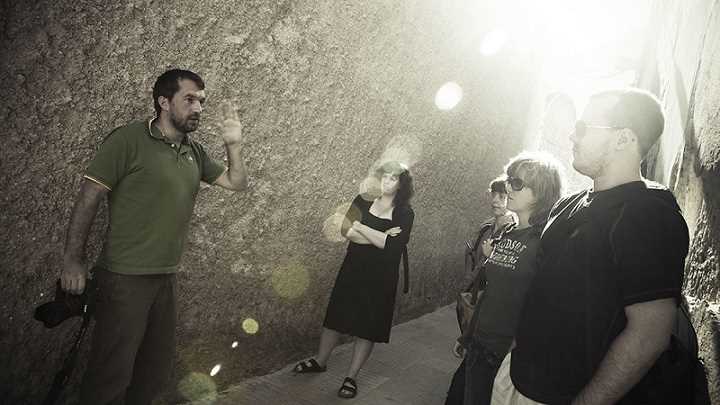
More than ten years later, we’ve travelled the world, had stacks of amazing press and experienced some unforgettable adventures with you.
And that manifesto we put together then is still proudly pinned to the wall of our HQ. Of course, we’ve expanded the ethos of non-tech, creative tuition, and folded in lots of lovely boutique hotels (well, we may as well stay somewhere nice), restaurants only the locals know about and some unique experiences not available elsewhere – from meeting Fidel’s photographer in Havana to shooting a living goddess in Kathmandu.
Along the way, we’ve published over 50 of your pictures in various magazines, newspapers and journals. And from our very first trip to France, with Jay winning The Guardian ‘Photograph of the Month’, many of you have won awards from shots you’ve taken on the trips. We’ve been blessed to attend numerous awards ceremonies for super-prestigious photography competitions, including Wanderlust Travel Photo of the Year, National Geographic Traveller Photography Competition (the two biggest photo comps in the year). A few of you have even turned pro, and won awards to boot!
But the best thing is we’ve been to places we never thought we would go to, learnt the art of photography, made some friends for life, and acquired travel stories to wow any dinner table. So …
THANK
YOU