



Read this before you buy a new camera.
Photography Holidays Camera Advice
Summers here, so you’re thinking maybe to buy a ‘proper’ camera? OK, so you’ve made the decision. Now what?
In this guide, we’ve cut through the fluff, taken a deep breath and listed our top tips on what to buy. Sure, we’ll drop in some names, but as you’ll see, it’s not about brand per se, more what you are going to use the thing for. Along the way, we’ve got some pocket-pleasing tips so you’ve got some change for some clothes in the sales, and a little plan to get you started once it’s unboxed and ready to rock, whether you’re considering a photography holiday in Cuba, Rajasthan, or any of our other worldwide photographic workshop destinations.
Buying a Nikon doesn't make you a photographer. It makes you a Nikon owner.
— Unknown
Tip No.1 - Don't buy anything
OK, bear with us here. You’ll get a new trinket in the end.
The reality is that almost all of the cameras on the market are amazing. Sharp pictures, lovely colours, great in the hands. Brilliant. The problem is that the shelves in your local Jessops are stacked full with zillions of options; you’ve got DSLR, Micro Four Thirds, Mirrorless, Fuji, Olympus, Nikon, Sony. Argh. Someone you know has recommended Canon because they love Canon. But the commission-hungry guy in the shop is steering you towards something entirely different. What to do?
Our advice is: walk out. Everyone has a camera nowadays, so call up your friends and get them to take you out on a little walkabout, and show you what they’ve got. You see, lots of cameras ultimately won’t ‘feel right’. If you think that at the start, then it’s not going to change – hasty purchases are going to leave you stuck. So too bulky/small/large/heavy isn’t going to cut it. The screen might be too small/menus too fiddly. Take your time – head out a few times with some different kit and do your research on location, not on the net. These things aren’t cheap, and it’s best to choose right – once and for all. Hey, you can even head back into the shop again, hand over your wallet, and take one for a test drive. If it’s a decent camera shop, they don’t mind. Failing that you could head out and rent one. Drop us a line and we’ll recommend some good places to go, if you like.
The point is, waiting a while gives you time to find a camera that suits you, plus gives you a chance to try out some different styles of photography. There’s no point buying a massive DSLR with zoom lens, if actually you’re drawn to street photography and using it will make you stick out like a sore thumb.
We’ve been running photography trips for more than 15 years and lost count of how many cameras have gone onto eBay after one of our courses. So save yourself all the hassle. Don’t buy one (for a bit).
Saturate yourself with your subject and the camera will all but take you by the hand.
— Margaret Bourke White
Tip No.2 - Just say no
Right. You’ve done your time, found your match, and you’ve got your credit card in hand. Retailers are getting killed by the internet, so they’ve rolled out a combination of trade-in, cash back and bundles to get you through the door.
However, twenty minutes in, you’ve got a fine deal on the camera you’ve-been-busy-making-sure-is-right-for-you (tick), but the counter has a load of other stuff there you’ll ‘definitely need’ – most of them expensive lenses with lots of acronyms. The cheap deal you imagined is becoming actually not that cheap.
Having done the same back in the day, and witnessed many clients arrive with more-kit-than-they-need, our advice to you is look to buy the body only, and pick one lens to start off with. If you need some tips on which one to choose, read our blog post on ‘What lens to buy’ to give you some help.
Having a new camera is bad enough to get to grips with, so make it as easy for yourself as possible. Adding in a troupe of lenses to the mix is often a step too far. And down the line, you’ll actually find you’ll wear one or two lenses to death, and the rest will sleep in the cupboard. Best to buy when you need, not overbuy and regret.
The less gear you use, the more you grow as a photographer. Although there are fewer options available, you'll find more creative ways to capture what you feel. In a way, all your technical options before turn into creative solutions that improve your photography even more.
— Marius Vieth
Tip No.3 - Don't get the latest model
When Canon brought out its 20-megapixel 6D model, in 2013, it won an EISA award for ‘Best Product’ – Amateur Photographer Magazine called it “superb”. At £1629, it was “everything any photographer could want”. And the price for this camera now, just 10 years later? A humble £420. Brand new. In the box.
Back in 2010, one savvy blogger decided to test out this continual desire we have to acquire the latest kit. He shot one image on a 6-megapixel camera, and the same image on a 21-megapixel – printed both and hung them on the wall. He asked friends and family to pick which one was the ‘expensive camera’ and which not. No one could tell the difference, the A3 sized prints simply weren’t large enough for anyone to tell.
Of course, beyond megapixels, cameras have improved in the last decade. But cameras touted as the latest thing a few years ago are going for half the price now, so our tip is snap them up and not the latest one.
If you’re keen to not spend too much and get the most bang for your buck, look at eBay. The site will be full of last years cameras recently replaced by Santa, with very little mileage on them (Simply ask them the activation count, or failing that the file number from their last shot to check. DSC0234.JPG means the camera has only ever taken 234 shots – they are built for between 20,000 – 50,000).
For me, the camera is a sketch book, an instrument of intuition and spontaneity.
— Henri Cartier-Bresson
Tip No.4 - If all else fails
If there are too many chiefs and not enough Indians in this scenario, here is our no-snooze roundup based on the cameras we’ve seen and experienced on our holidays.
DSLR v Micro Four Thirds v Rangefinder
The reason DSLR’s (Digital SLR) have been so popular is that they are easy to compose. When you look through the viewfinder, you see the exact shot you’re going to take. The other options are smaller, lighter, seemingly the obvious choice – but you see the shot on a small TV screen and it’s never quite what you see in the frame. Clients are divided – best to try out each for yourself. Seems minor, but it’s a love/hate thing that might change your mind.
Canon v Nikon v Fuji v Olympus v Sony
Nikon’s are built well, feel solid and high quality, but their menu systems are super complicated and tend to change after every model (thanks for that). Canon’s are more plasticky but easier to use. Fuji’s are really well built, so are Olympus and Sony. Basically, its horses for courses.
One’s to watch
Here are a couple of cameras to take a sneaky peek at.
- The Canon 1200D is a steal under £300. Really lightweight, small body so fits well in your hands, and packs 18 megapixels and an HD video camera too. Super simple to use too.
- Fuji X100 – professionals love this camera – its got a fixed lens so good for street, portraits, landscapes – and f/2 creates that lovely blur in the background. It produces beautiful, sharp, lovely coloured pictures; if the latest model’s price puts you off, there were two before it much lower.
If you’re still stuck, and toying with a couple of options, drop us a line on our Contact Form and we’ll gladly help out. Happy shopping!

Which lens should I buy?
In the seventies it was easy. There were only a few camera bodies – Nikon, Olympus and Canon – and a handful of lenses per company. All delivered incredible results. Job done.
Unfortunately, no-one really bought them. So in 1987, Canon (and Nikon) decided to do something about it. They launched the EOS range, a range of cameras that looked less techy, easier to use, with rounded corners and plenty of auto buttons that could take the head scratching out of the equation. Sales picked up. And once digital came along, they couldn’t make them fast enough.
Inevitably, in the early naughties, during this purple patch, the beancounters came in and took a look around and see where profits could be increased even more. And their eyes settled on the lenses. “Let’s bundle a crappy lens with a body and sell it for more”, they said. And so the kit lens was born.
And this trick worked for over a decade, until the bloggers and vloggers got in on the act and started calling them out. Even today, not much is different. If you hold one of these vintage, manual focus, all metal stunners in one hand, and a light-as-air plastic tube in the other, you’ll see what we mean.
But hope is alive and kicking. There are some great options in between the chasms. In this guide, we’ll try steer you out of the grasp of the latest deal in the airport Dixons, and bring you safely to land with some quality glass that will do justice to your camera.
If your photographs aren't good enough, you're not close enough
Robert Capa
Tip No.1 : Know what you’re buying
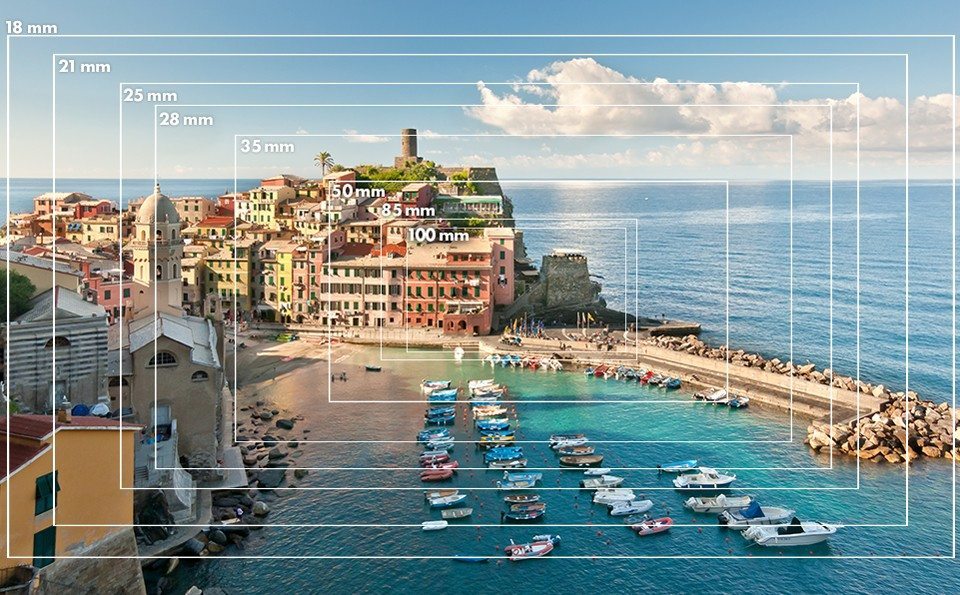
First, let’s whizz through the lens types in the most pain-free way possible. And it’s all linked to our eyes. The focal length of the eye is 50mm. We call this a Standard. So any lenses with focal length lower than 50mm, which shows a field of view wider than our eyes can see, is called a Wide. Conversely, focal lengths over 50mm show a narrower and a magnified field of view. These are called Telephoto.
So what? I hear you ask. Well, if you’re planning to take a dynamic shot of your son scoring an overhead kick in his footy final, a Wide lens isn’t going to cut it – from the sidelines he’ll appear as a speck in the middle of lots of mush. Taking a big long Telephoto to a viewpoint above the Grand Canyon is only going get you a rock, not the epic panoramic scene all around you.
So broadly (although rules are made to be broken) wide lenses are good for landscapes, street scenes, standard for portraits, still life, food, that kind of thing, and telephoto for sports and things so far away you can’t manage to get there.
Tip No.2 : Buy prime
So we’ve got an idea of what’s what. And ready to spend some money. You’ve found a lens that covers wide, standard and telephoto, for not much cash and to boot will save you all the hassle of changing them over and so on.
Unfortunately, this is a trap. As we mentioned in another post on buying cameras, everything on the market is pretty damn good. But put a crappy lens on the front of your shiny new megapixel-wonder and you’re taking it’s legs away.
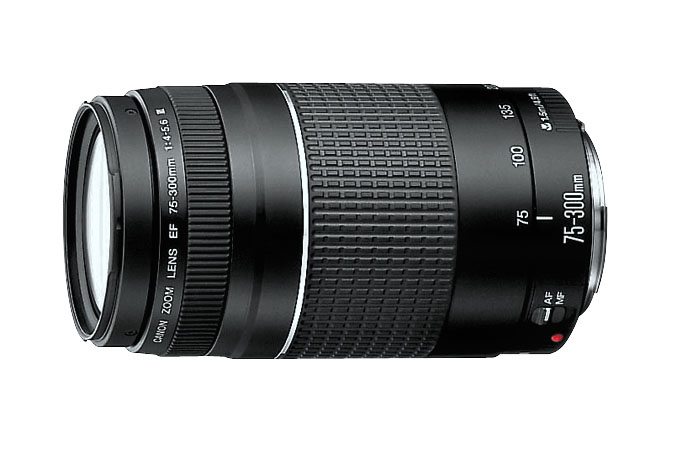
Those same beancounters who decided to add kit lenses onto the ‘deal’, also came up with all-in-one zoom lenses. Built from flimsy plastic, wafter thin glass and sticky tape – yes, some are better than others, but in the main, they should be used as book stoppers on your shelves, or burnt to death. They are crap. Anything that reads 18-300, 28-200 and so on. Sell.
If you’ve got a spare £500+, by all means buy a zoom, but make it a smaller range, e.g. 24-70. They’re not anywhere near as bad, but there is a Plan B that will cost less and improve your photographs at the same time. That plan is Prime.
Prime lenses are fixed focal lengths, e.g. 50mm, 28mm, 100mm etc. And the difference? Unlike their estranged all-in-one cousins, the colours ‘pop’, your subjects look three-dimensional, and they are oh-so sharp. But that’s not the best thing about them. You see, if you’ve ever used a big all-in-one-zoom, inevitably you get lazy. Cross the street to get closer to the action? Move a little higher so you can get a better vista? Nah. Just crank up the zoom and you can do all your shots from a single position.
But with primes, you decide on the shot, look through the viewfinder, and because you can’t zoom in, you decide you’re not close enough. By getting closer, you notice more, your images become more richer, detailed and interesting. It’s a win-win.
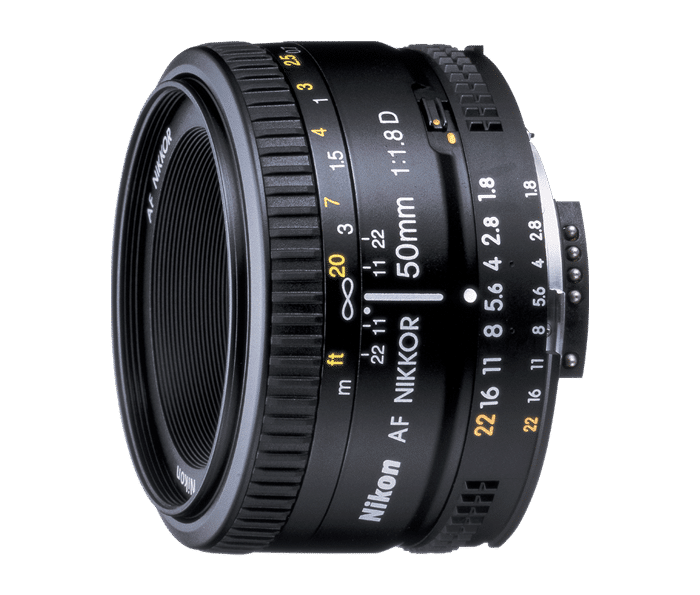
However, that’s still not the best thing about them. That is the price. A Canon 50mm f/1.8 STM, which produces lovely colours, super sharp and that lovely blur in the background. Yours for £78. The Nikon equivalent? £84. Sure, some of the other focal lengths are a tad more, but it’s a great place to start.
And your camera will be forever grateful.

Tip No.3 – Go retro
In a few years, you’ll have worked out exactly what kind of pictures you’d like to take, and have the best kit that suits you. Having taught thousands of budding photographers over the years, and blessed to see them time and time again on our holidays, we’ve noticed one thing about kit. The lens collection they start with isn’t ever the one they end with. There is an obvious trend to head out and buy a lens for all purposes (helped in part by the enthusiastic camera shop employee) – because ultimately what we need to do in the early years is try out everything, then decide which bits you like and which bits you don’t – so how else can we do it?
Hopefully, we’ve managed to persuade you to walk past the zoom-section in store. But you still need lenses, to practice, to work out whether you like it, right? Our 50mm recommendation in the last section is a no-brainer (and will still be in your bag come the end, trust us). So you’ve got one lens.
You could rent, but it’s expensive and time consuming. Borrow one, but you’re not going to get long. So our suggestion is go retro. As we mentioned, those lenses in the seventies were super well built, sharp as hell and lovely colours. eBay sells them in droves for around £40 a pop. They also sell adaptors too for under a tenner; email us if you get stuck, but there are plenty on there. So for £50 you’re getting a top lens used by pros and sold for £500+ back in the day. OK, they are not autofocus, but does it matter? Once you’ve decided whether you like it or not, you can sell back for the same money and buy the autofocus equivalent.
Our story ...
How time
flies
I think it was crossing the border into Senegal when the penny finally dropped. The queue of dusty trucks, oil tankers and (our) procession of ‘bangers’ snaked back as far as the eye could see, and the already four hour wait looked like it was going to be some while yet.
Roger Norum (Creative Escapes co-founder) & I, having signed up for the London – Banjul Rally the previous year (a charity version of the famous Paris – Dakar, but using cars that cost no more than £200), found ourselves reminiscing about precisely how terrible our art degree tuition had been. And now, having ‘grown up’ how utterly dated the majority of photography and writing courses were, cut from similar cloth.
The idea that we could really do something better had been bubbling for months, so with some time to think, we set to work outlining our manifesto. How we thought things should be done.
First, all the tech heavy stuff had to go. My lecturer had made sure I knew the precise angle of the blades inside the lens, the type of glass used, even the location of where the damn thing was manufactured. But did I know simply which lens to use at any given moment? Nope.
Next, how come all of the courses only taught you just how to use your camera? How many weeks can you spend just learning about all the switches, buttons and dials? What about actually taking pictures, composing, working your subject. The interesting, creative, reason-why-we-do-it-bit?
Also, I’d lost count of the amount of microsleeps I’d had in the lecture hall. Is it really possible to talk without stopping for an hour? Can we join in? Can we have a go?
And so it
began
We spent the summer in the south of France trialling our new ideas – and the feedback was so positive we decided to go for it – with France, Spain & Morocco our first trips.
And just a couple of months later, we opened the weekend editions of the broadsheets and saw our writing holidays had been voted Five Best Writing Holidays by the Guardian and our photography holidays Six Best Photography Breaks by the Telegraph.
Not bad for our first ever press.
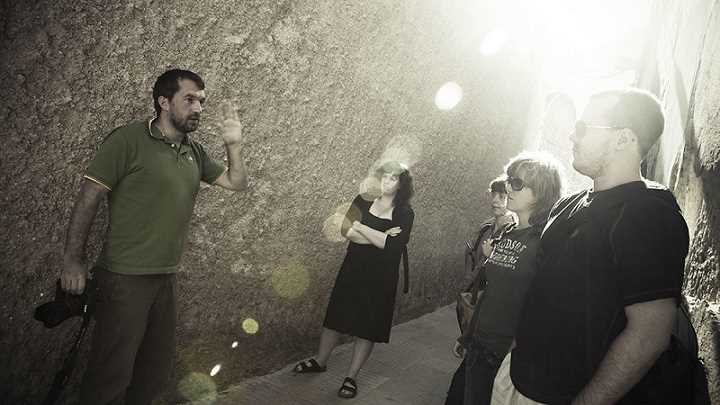
More than ten years later, we’ve travelled the world, had stacks of amazing press and experienced some unforgettable adventures with you.
And that manifesto we put together then is still proudly pinned to the wall of our HQ. Of course, we’ve expanded the ethos of non-tech, creative tuition, and folded in lots of lovely boutique hotels (well, we may as well stay somewhere nice), restaurants only the locals know about and some unique experiences not available elsewhere – from meeting Fidel’s photographer in Havana to shooting a living goddess in Kathmandu.
Along the way, we’ve published over 50 of your pictures in various magazines, newspapers and journals. And from our very first trip to France, with Jay winning The Guardian ‘Photograph of the Month’, many of you have won awards from shots you’ve taken on the trips. We’ve been blessed to attend numerous awards ceremonies for super-prestigious photography competitions, including Wanderlust Travel Photo of the Year, National Geographic Traveller Photography Competition (the two biggest photo comps in the year). A few of you have even turned pro, and won awards to boot!
But the best thing is we’ve been to places we never thought we would go to, learnt the art of photography, made some friends for life, and acquired travel stories to wow any dinner table. So …
THANK
YOU
